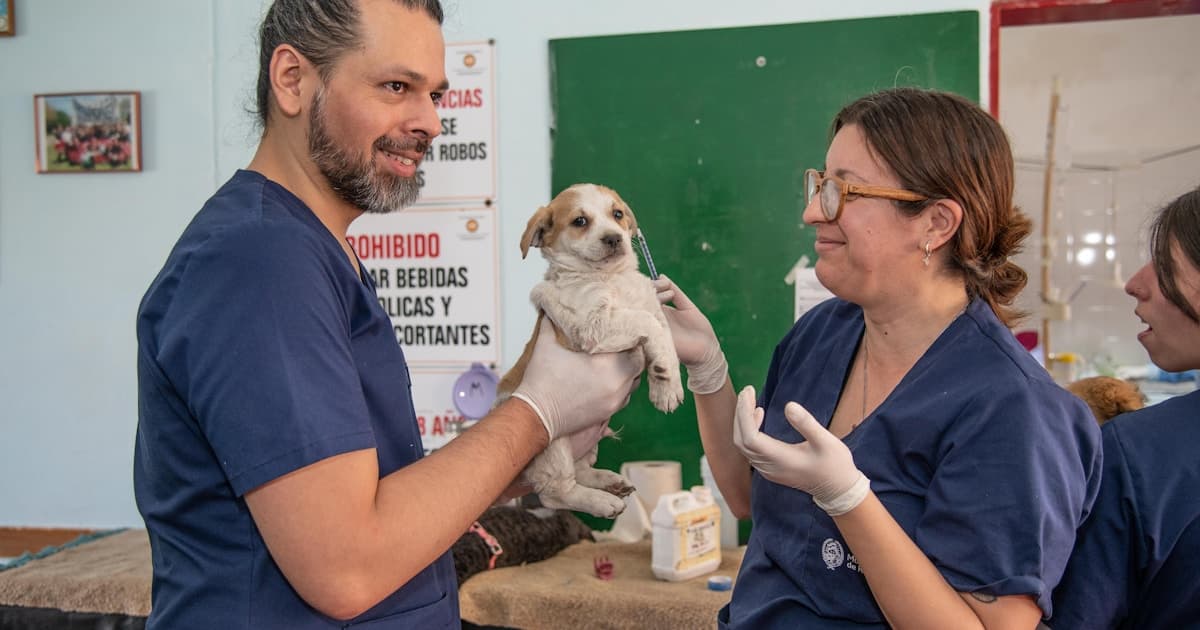
How Many Vet Schools Are There in Canada?
To become a veterinarian in Canada, you must earn a Doctor of Veterinary Medicine (DVM) degree from an accredited veterinary school. Canada has only 5 veterinary schools, making veterinary medicine one of the most seat-limited professional programs in the country. For comparison, Canada has 10 dental schools and 17 medical schools, but only 5 vet schools. Canada had an estimated 29.4 million pets in 2024 (including 8.9 million cats and 8.3 million dogs), and ~540 new veterinarians graduate each year to serve them.
Source: Canadian Animal Health Institute (CAHI), 2024 Canadian Pet Population Survey conducted by Leger, Apr 2025, cahi-icsa.ca; Made in CA, "Pet Ownership Statistics in Canada", Jan 2026, madeinca.ca
| School | Location | Degree | Duration | Language | Approx. Seats/Year | Eligible Provinces (Subsidized Seats) |
|---|---|---|---|---|---|---|
| Ontario Veterinary College (OVC) | University of Guelph | DVM | 4 years | English | ~150 total | ~100 domestic (Ontario) + 20 Northern Ontario (Lakehead U partnership, from Fall 2025) + ~30 international |
| Western College of Veterinary Medicine (WCVM) | University of Saskatchewan | DVM | 4 years | English | Up to ~98 | 68 IPA seats for BC, Saskatchewan, Manitoba, northern territories + up to 30 non-IPA seats |
| Atlantic Veterinary College (AVC) | UPEI | DVM | 4 years | English | 70 → 95 (from 2026-27) | Atlantic provinces (subsidized) + all Canadians (unsubsidized seats) |
| Faculty of Veterinary Medicine (UCVM) | University of Calgary | DVM | 4 years | English | ~100 (doubled in Fall 2025) | Primarily Alberta residents |
| Faculte de medecine veterinaire (FMV) | Universite de Montreal | DMV | 5 years | French | 120 total | 96 at Saint-Hyacinthe + 24 at Rimouski; Quebec residents |
Source: CVMA (Canadian Veterinary Medical Association), "Investments in Veterinary Professional Education", canadianveterinarians.net; University of Calgary, "New UCalgary Faculty of Veterinary Medicine facility enhances education and connection", Sep 2025, ucalgary.ca; OVC, "DVM Program Application", ovc.uoguelph.ca; University of Guelph, "Answering the Call: A Look at U of G, Lakehead's Historic Veterinary Medical Training Expansion", ovc.uoguelph.ca/news; Universite de Montreal, "Doctorat de 1er cycle en medecine veterinaire", admission.umontreal.ca; Hepper, "How Much is Veterinary School in Canada? 14 Surprising Statistics", Jan 2026, articles.hepper.com
"Eligible Provinces" refers to which provinces' residents can apply for government-subsidized tuition seats. It is NOT a service obligation after graduation. Graduates can practice anywhere in Canada.
Total seats across all 5 schools (2025-2026): approximately 540 per year (OVC ~150 + WCVM up to ~98 + AVC 70 + UCVM ~100 + FMV 120). AVC is expanding from 70 to 95 seats beginning with the 2026-2027 admissions cycle (Class of 2031), which brings the national total to approximately 560. Even with these expansions, the total remains far below demand.
Source: UPEI, "Atlantic Veterinary College Expands Access to Canadian Veterinary Students", Jun 2025, upei.ca
OVC admits students through four separate cohorts: approximately 100 seats in the Domestic Undergraduate Cohort (Ontario residents), 20 seats in the Northern Ontario Cohort (through the new Collaborative DVM Program with Lakehead University, starting Fall 2025), plus separate Domestic Graduate and International cohorts. The total class size across all cohorts is approximately 150.
WCVM operates a two-tier system: 68 provincially-subsidized seats (IPA seats) allocated among BC, Saskatchewan, Manitoba, and the northern territories, plus up to 30 non-IPA seats. Non-IPA students pay the standard tuition (~$14,400/year) PLUS an additional non-IPA fee of $55,000/year, for a total of approximately $69,400/year. Total class size: up to approximately 98.
Source: University of Saskatchewan, WCVM non-IPA viewbook, admissions.usask.ca — "68 provincially-subsidized seats"; "standard WCVM tuition and fees (about $14,400 per year) plus an additional, non-IPA tuition of $55,000 per year. Total tuition costs are approximately $69,400 per year"
FMV (Universite de Montreal) admits 120 students per year: 96 at the historic Saint-Hyacinthe campus and 24 at the newer Rimouski campus (source cited above).
UCVM doubled its class size from 50 to 100 in Fall 2025 with the opening of the $68.5M Veterinary Learning Commons at the University of Calgary.
Note on terminology: Universite de Montreal awards a DMV (Doctorat en medecine veterinaire), which is the French equivalent of DVM. The degree is identical in scope and accreditation.
The Full Pathway: High School to Licensed Veterinarian
Step 1: High School
There are no veterinary-specific high school requirements. The University of Saskatchewan confirms: "There are no specific high school requirements for the DVM program." However, you need strong grades in Biology, Chemistry, Physics, and Math to enter a university science program, which is where most future veterinarians begin their undergraduate prerequisites.
Source: University of Saskatchewan, "Veterinary Medicine Admissions", admissions.usask.ca/veterinary-medicine.php
Step 2: Undergraduate Studies (2-3 years minimum)
Veterinary school does not require a specific undergraduate major. At OVC (Ontario Veterinary College, Canada's largest veterinary school, at the University of Guelph), applicants need a minimum of 2 years (4 full-time semesters) of undergraduate study and 8 prerequisite courses, including biology, chemistry, biochemistry, genetics, statistics, and humanities. The minimum cumulative average is 75% (3.2 on a 4.0 scale). OVC also requires CASPer (Computer-based Assessment for Sampling Personal Characteristics, a situational judgment test that evaluates personal and professional qualities through video-based scenarios).
Source: University of Guelph, OVC, "DVM Program Application Selection Process", 2026 cycle, ovc.uoguelph.ca/recruitment/en/applyingtodvm/selectionprocess.asp
WCVM (Western College of Veterinary Medicine, Canada's veterinary school serving western provinces, located at the University of Saskatchewan) also requires CASPer (Casper 2, CSP-10211). The last CASPer test date for the 2026 application cycle is January 22, 2026. Admission is based on GPA (overall average including all university courses weighted 2/3, plus best full year average weighted 1/3), CASPer, a supplemental application, and interview. Provincial residency in BC, Saskatchewan, Manitoba, or the northern territories is required for subsidized seats.
Most Canadian vet schools require CASPer (a situational judgment test) but do NOT require a subject-specific standardized test like the DAT or MCAT. As with dentistry, Life Science programs are the most natural fit because the standard first- and second-year curriculum covers biology, chemistry, and biochemistry prerequisites simultaneously.
Source: Future Vets Club FAQ, futurevetsclub.com/faq: "Generally any Bachelor of Science program will give you a good background... Pre-vet students commonly take programs such as Animal Biology, Bio-Medical Science, Biological Science, Zoology"
An important difference from dental school: you do NOT need to apply after only 2 years. Apply as soon as you meet the minimum prerequisites. If you are not admitted, continue your undergraduate degree and reapply. There is no downside to applying early. However, if you are admitted and enter vet school without a completed bachelor's degree, you will have no undergraduate degree to fall back on if you later need to leave the program.
Step 3: Veterinary School (4 years)
The DVM program is 4 years at all English-language schools (5 years at Universite de Montreal). Years 1 and 2 focus on biomedical sciences, anatomy, physiology, pharmacology, and preclinical labs. Years 3 and 4 shift to intensive clinical rotations covering a wide range of species: companion animals (dogs, cats), large animals (horses, cattle), exotic pets, and wildlife. Students gain hands-on experience in teaching hospitals and affiliated clinics.
Step 4: NAVLE Licensing
After graduating, you must pass the NAVLE (North American Veterinary Licensing Examination) to practice in Canada. The NAVLE is a standardized exam used across both Canada and the United States, administered by the ICVA (International Council for Veterinary Assessment). It consists of 360 multiple-choice questions covering all species commonly seen in private practice, completed in 6.5 hours. The NAVLE is scored on a scale of 200 to 800, with a passing score of approximately 425. The composite NAVLE pass rate across all test takers was 88% in 2024, down from 95% in 2020. The AVMA Council on Education expects 80% or more of each school's graduating seniors to have passed at the time of graduation. Pass rates vary significantly by school. Beginning with March 2026, candidates have up to 5 attempts. The NAVLE is offered three times per year. After passing, you register with your province's veterinary licensing body.
Source: ICVA, "NAVLE", icva.net/navle; CVMA, "North American Veterinary Licensing Examination (NAVLE)", canadianveterinarians.net; VIN News, "NAVLE pass rates ticked up in 2024, stemming slide", Feb 2025, news.vin.com — "The composite pass rate of test takers was 88%"
Total timeline: High school graduation, then 2-3 years undergraduate, then 4 years DVM, then NAVLE licensing (typically passed within a few months of graduation). Total: approximately 6 to 8 years from high school to licensed veterinarian. Like dentistry, there is no mandatory residency for general practice. Graduates can begin practicing immediately after passing the NAVLE.
How Competitive Is Admission?
Veterinary school admission in Canada is extremely competitive, comparable to or harder than dental school due to even fewer seats. With only ~540 seats across 5 schools and thousands of applicants, acceptance rates at most schools are in the single digits for out-of-province applicants.
Academic Requirements
At OVC, the minimum cumulative average is 75% (3.2 on a 4.0 scale), but the actual admitted average is significantly higher. GPA is calculated using a 50:50 formula: 50% from the last 4 full-time semesters, 50% from all prerequisite courses. OVC also requires the CASPer situational judgment test. WCVM likewise requires CASPer (Casper 2). Admission at WCVM is based on GPA (overall average weighted 2/3 plus best full year average weighted 1/3), CASPer, a supplemental application, and interview.
How Does Vet School Compare to Dental and Medical School?
Veterinary school is less academically competitive than dental school in terms of GPA and testing requirements. The table below compares verifiable admission data across the three professions:
| Metric | Vet (OVC) | Dental (UofT DDS) | Medical (varies) |
|---|---|---|---|
| Minimum GPA to apply | 75% (3.2/4.0) | 70% (3.0/4.0) | Varies, typically 3.0-3.5/4.0 |
| Competitive/admitted GPA | ~85%+ (unofficial; see note) | 3.96/4.0 | 3.85-3.95/4.0 |
| Standardized test required | CASPer at most schools; no DAT/MCAT | DAT required (admitted avg 24/30, top ~5% of test takers) | MCAT required (competitive ~515/528) |
| Class size (largest English school) | ~150 (OVC: ~100 domestic + 20 Northern Ontario + ~30 international) | ~96 (UofT) | ~260+ (UofT MD) |
| Total seats nationally | ~540 across 5 schools (~560 after AVC expansion) | ~640 across 10 schools | ~2,900 across 17 schools |
| Interview invitations | ~200 invited for ~100 domestic seats (OVC) | ~700 invited for ~96 seats (UofT) | Varies widely by school |
Source: OVC, "DVM Program Application Selection Process", 2026 cycle, ovc.uoguelph.ca; UofT Faculty of Dentistry, DDS 2025 admissions, dentistry.utoronto.ca; Student Doctor Network and Future Vets Club forum data on OVC competitive GPA ~85%+; AFMC, ~2,900 medical school seats nationally; UofT PharmD admissions, ~700 applicants invited to assessment for ~250 seats
Note: OVC does not publish admitted student averages. The ~85% figure is based on applicant reports from student forums and is not officially confirmed by OVC.
The data shows that dental school has a dramatically higher academic bar: an admitted GPA of 3.96/4.0 versus an unofficially reported ~85% for vet school, PLUS a mandatory DAT exam where admitted students score in the top 5% nationally. Vet schools require CASPer at most schools but no subject-specific standardized test like the DAT or MCAT. The main challenge of vet school is NOT the academic cutoff: it is the extreme scarcity of seats (only ~540 nationally, the fewest of any major health profession) combined with strict provincial restrictions that limit which schools you can even apply to. An Ontario student can apply to 10 dental schools but only 1 vet school (OVC). A Manitoba student can apply to 10 dental schools but only 1 vet school (WCVM).
Animal Experience Is Essential
Unlike dental or medical school, veterinary schools place significant weight on hands-on animal experience. This includes veterinary clinic volunteering or shadowing, farm work, animal shelter experience, wildlife rehabilitation, or research involving animals. Most competitive applicants have hundreds of hours across multiple species (companion animals, large animals, and ideally exotic or wildlife). Schools assess both the breadth and quality of experience, not just hours logged.
CASPer Required, But No DAT or MCAT
Most Canadian vet schools (including OVC and WCVM) require CASPer, a situational judgment test, but do NOT require a subject-specific standardized test like the DAT or MCAT. All schools also conduct interviews. The standardized testing burden is lighter than for dentistry or medicine, but it is not zero.
Provincial Restrictions and Total Cost
Provincial Seat Allocation: The Biggest Barrier
This is the single most important factor for families to understand. Unlike dental schools (where Ontario schools have no provincial preference), veterinary schools operate under strict interprovincial agreements that reserve seats for residents of specific provinces. If you live in the wrong province, you may have very few options.
| Your Province | Which Vet Schools Can You Apply To? | Notes |
|---|---|---|
| Ontario | OVC (Guelph) | ~100 domestic seats + 20 Northern Ontario seats (Lakehead U partnership, from Fall 2025); ~30 international seats |
| British Columbia | WCVM (Saskatchewan) | BC has designated seats within WCVM's 68 IPA seats |
| Alberta | UCVM (Calgary) | ~100 seats (doubled from 50 in Fall 2025 with the new $68.5M Veterinary Learning Commons), primarily Alberta residents |
| Saskatchewan | WCVM (Saskatchewan) | Home province advantage within 68 IPA seats |
| Manitoba | WCVM (Saskatchewan) | Manitoba has designated seats within WCVM's 68 IPA seats |
| Atlantic provinces (PEI, NS, NB, NL) | AVC (UPEI) | Current 70 seats (51 subsidized + 19 unsubsidized); expanding to 95 (54 subsidized + 41 unsubsidized) from 2026-2027 |
| Quebec | FMV (Universite de Montreal) | 120 seats total (96 Saint-Hyacinthe + 24 Rimouski), French language, priority to Quebec residents |
| Any province | AVC unsubsidized seats; WCVM non-IPA seats | AVC: 19 unsubsidized seats (rising to 41 in 2026-27), open to all Canadians. WCVM: up to 30 non-IPA seats (standard tuition + $55,000/year non-IPA fee). |
Source: WCVM, "Veterinary Medicine Admissions", admissions.usask.ca/veterinary-medicine.php; UPEI, "Understanding the DVM Admissions Process", 2026-2027 guide, upei.ca; CVMA, "Investments in Veterinary Professional Education", canadianveterinarians.net
All Canadian vet schools require applicants to be Canadian citizens or permanent residents for subsidized seats. OVC accepts approximately 15 international students per year. AVC's 19 unsubsidized seats (previously designated for international students) were opened to all Canadian applicants beginning with the 2025-2026 cycle, though tuition for these seats is at the unsubsidized (international) rate.
How Is Provincial Residency Determined?
Provincial residency for vet school admission is NOT based on where your child attends university. Time spent enrolled as a full-time student at a post-secondary institution does NOT count toward provincial residency. This is critical: an Ontario family whose child studies undergraduate at UBC in British Columbia is still an Ontario resident for vet school purposes.
Each school defines residency slightly differently, but the common rules are:
| School | Residency Rule |
|---|---|
| OVC (Guelph) | Lived in Ontario for 12 consecutive months prior to January 1, NOT including time in post-secondary education. Alternatively, grew up in Ontario (childhood years count). |
| WCVM (Saskatchewan) | Must be a resident of BC, Saskatchewan, or Manitoba as defined by the WCVM Applicant Manual. Time in post-secondary does not count. |
| UCVM (Calgary) | At least ONE parent must live in Alberta at the time of application. Alberta government student aid residency guidelines apply. |
| AVC (UPEI) | For dependent students: determined by parent/guardian's home address during 12 months prior to application deadline. For independent students: the student's own address during the most recent 12 months NOT spent as a full-time post-secondary student. |
Source: OVC, "DVM Program Application", 2026 cycle, ovc.uoguelph.ca/dvm-program-application: "A resident is an individual who has lived in Ontario for 12 consecutive months prior to January 1, not including time spent enrolled in post-secondary institutions"; UCVM, DVM ViewBook 2024, vet.ucalgary.ca: "At least ONE of your parents must live in Alberta"; AVC/UPEI, "Understanding the DVM Admissions Process", 2026-2027, upei.ca: "A dependent student's provincial residency is determined by the home address of the parent/guardian"
In practical terms: if your family lives in Ontario but your child studies undergrad at a university in Saskatchewan, your child is still an Ontario resident and must apply to OVC, not WCVM. The only way to change provincial residency is to live and work (not study) in another province for at least 12 consecutive months, or to have a parent/guardian move to that province.
How Much Does It Cost?
Veterinary school tuition in Canada is significantly cheaper than dental school for domestic students with subsidized seats. Annual tuition for subsidized domestic students ranges from approximately $10,000 (OVC, Ontario) to approximately $14,400 (WCVM, Saskatchewan) per year.
AVC (UPEI) charges approximately $67,717 per year for unsubsidized seats. These were previously designated as international seats and now include Canadian applicants who do not qualify for provincial subsidies. WCVM non-IPA seats are even more expensive at approximately $69,400 per year (standard $14,400 tuition plus a $55,000 non-IPA fee). For comparison, subsidized seats cost approximately $10,000 to $14,400 per year.
Source: University of Guelph Registrar, OVC DVM tuition $9,937.20 (2023-24); WCVM tuition figures from the non-IPA viewbook cited in the Overview section; UPEI, "Understanding the DVM Admissions Process", 2026-2027, upei.ca: "Applicants who apply for an unsubsidized seat must remit unsubsidized student tuition... comparable to international tuition rates"
| Profession | 4-Year Tuition (Domestic Subsidized) | 4-Year Tuition (International/Unsubsidized) |
|---|---|---|
| Veterinary (DVM) | $40,000-$60,000 | Up to ~$270,000 (AVC unsubsidized: ~$67K/yr) |
| Dentistry (DDS/DMD) | $100,000-$180,000 | Up to ~$360,000 (UofT: ~$90K/yr) |
| Medicine (MD) | $60,000-$100,000 | Up to ~$350,000+ (varies widely) |
| Pharmacy (PharmD) | $60,000-$85,000 | Up to ~$200,000+ (UofT: ~$50K/yr) |
Source: Vet tuition from individual school admissions pages; Dental tuition from UofT Faculty of Dentistry fees page, dentistry.utoronto.ca; Medical tuition ranges from individual school websites; PharmD tuition from UofT Leslie Dan Faculty, 2025-2026
All figures are tuition only, before living expenses, instruments, books, and supplies. Veterinary medicine has the lowest domestic tuition of the four major health professions, primarily because provincial subsidies cover a significant portion of the true cost of training.
Saskatchewan veterinarians working in designated communities can apply for provincial student loan forgiveness of up to $20,000 over five years.
Veterinary Medicine vs Dentistry vs Medicine: How Do They Compare?
Some families consider both veterinary medicine and dentistry for their child. The undergraduate prerequisites overlap significantly (biology, chemistry, biochemistry), and both are 4-year professional programs with no mandatory residency for general practice. But the economics and accessibility differ dramatically.
| Vet (DVM) | Dentistry (DDS/DMD) | Medicine (MD) | |
|---|---|---|---|
| Schools in Canada | 5 | 10 | 17 |
| Total seats/year | ~540 (~560 after AVC expansion) | ~640 | ~2,900 |
| Standardized test | CASPer at most schools; no DAT/MCAT | Yes (DAT) | Yes (MCAT) |
| Admission emphasis | GPA + animal experience + interview | GPA + DAT + interview | GPA + MCAT + interview + CASPer (some schools) |
| Provincial seat restrictions | Very strict | Less strict (Ontario schools no preference) | Moderate (most have some in-province preference) |
| Domestic tuition (4 yrs) | ~$40K-$60K | ~$100K-$180K | ~$60K-$100K |
| Mandatory residency? | No | No | Yes (2-5+ years) |
| Time to independent practice | ~6-8 years from HS | ~7-8 years from HS | ~9-13+ years from HS |
| General practice salary | ~$125K/yr | $150K-$300K/yr | $250K-$400K/yr (after residency) |
| Private practice ownership | Yes, after licensing | Yes, after licensing | After residency only |
| Work-life balance | Generally predictable | Generally predictable | Highly variable, especially early career |
Source: Salary data: Government of Canada Job Bank, Veterinarian (NOC 31103), Labour Force Survey 2023-2024, published Nov 2025; Dentist (NOC 31110), 2021 Census; tuition from individual school admissions pages
Veterinary medicine costs the least in tuition, has the fastest path to practice (no mandatory residency), and offers predictable work hours, but pays the least of the three. Dentistry has a higher earning ceiling with no residency, but costs two to three times more in tuition. Medicine pays the most long-term but requires mandatory residency (2-5+ years at ~$65K/year), delaying full earning potential by years. The right choice depends on whether your child wants to work with animals, teeth, or the full human body.
Veterinarian Salary and Career Paths
| Province | Low (CAD/hr) | Median (CAD/hr) | High (CAD/hr) |
|---|---|---|---|
| Canada (national) | $34.15 | $60.00 | $84.13 |
| Alberta | $40.75 | $62.50 | $88.94 |
| British Columbia | $35.58 | $60.00 | $86.54 |
| Manitoba | $38.46 | $50.48 | $72.12 |
| New Brunswick | $29.33 | $51.82 | $71.23 |
| Newfoundland | $40.13 | $57.35 | $76.72 |
| Ontario | $29.81 | $60.00 | $86.54 |
Source: Government of Canada Job Bank, Veterinarian Wages (NOC 31103), Labour Force Survey, Statistics Canada, reference period 2023-2024, published Nov 19, 2025, jobbank.gc.ca/marketreport/wages-occupation/4127/ca
At the national median of $60.00/hour, a full-time veterinarian earns approximately $125,000/year. This is lower than dentists (national median ~$150,000-$300,000) but comes with significantly lower educational debt. Alberta offers the highest wages, while Manitoba and New Brunswick are lower.
Specialization Paths
Veterinarians who want to specialize (surgery, dermatology, cardiology, oncology, emergency/critical care, etc.) must complete a residency program after their DVM, typically 3-4 years, followed by board certification exams. Veterinary specialists who are board-certified typically earn $150,000 to $250,000+ per year (Note: no official Canadian data source publishes veterinary specialist salary ranges. This estimate is based on industry reports and US data. Actual Canadian specialist salaries may vary.), compared to the general practice median of approximately $125,000. The gap is more significant than it appears: the $125,000 figure is a national median that includes part-time practitioners and early-career vets, while specialist salaries reflect full-time board-certified professionals with 3-4 additional years of residency training. A general practice veterinarian working full-time in a high-demand area like Alberta can also earn $150,000+, but specialists consistently earn at the top of the range. Specialization is optional and not required for general practice.
Practice Ownership
Like dentistry, veterinarians can own and operate their own clinics immediately after licensing. Clinic owners typically earn more than employed veterinarians, though they also take on business risk and overhead costs. The veterinary industry in Canada has seen increasing corporate consolidation, with large chains acquiring independent clinics, which has created both employment opportunities and concerns about practice autonomy.
Risks and Backup Plans
The Reality: Domestic Seats Are Extremely Scarce
With only ~540 seats across 5 schools and strict provincial allocation, many strong Canadian applicants do not get in. Some apply multiple times over 2-3 years. The scarcity is the primary reason many Canadians pursue veterinary education abroad.
Backup Plan 1: US Veterinary Schools
Over 30 AVMA (American Veterinary Medical Association, the US accreditation body for veterinary programs, equivalent to Canada's CVMA)-accredited US veterinary schools accept Canadian applicants. Well-known options include Cornell University, Tufts University, Oregon State University, Washington State University, University of Minnesota, and Colorado State University. Canadian applicants are typically treated as out-of-state students (not international), meaning tuition is higher than in-province rates but lower than full international fees. Out-of-state US vet school tuition typically ranges from $45,000 to $70,000 USD per year.
Graduates from AVMA-accredited US schools can return to Canada and take the NAVLE directly to obtain Canadian licensure, with no additional equivalency exams required.
When should you apply? Most students apply to US schools at the same time as Canadian schools, not as an afterthought. The application cycle for US vet schools uses VMCAS (Veterinary Medical College Application Service), which opens in May and closes in September, similar to the Canadian timeline. Applying to both Canadian and US schools simultaneously maximizes your chances. If you apply only after being rejected from Canadian schools, you will have missed the US deadline and lost an entire year.
Source: AVMA Council on Education, list of accredited veterinary schools, avma.org; VMCAS (Veterinary Medical College Application Service), vmcas.org
Backup Plan 2: International Vet Schools (Including Direct-Entry from High School)
For families who want to eliminate the risk of Canadian vet school rejection entirely, multiple international veterinary schools accept students directly from high school, with no undergraduate degree required. These are full professional veterinary programs (5-6 years) that include the science foundation and clinical training in a single integrated degree. This pathway bypasses the Canadian "2-3 years undergrad then apply" model completely.
The most important factor when choosing an international school is AVMA accreditation (American Veterinary Medical Association). Graduates from AVMA-accredited programs can take the NAVLE and practice in Canada directly, with no additional equivalency exams. The following schools are AVMA-accredited AND accept students directly from high school:
| School | Country | Degree | Duration | Notes |
|---|---|---|---|---|
| Royal Veterinary College (RVC) | UK (London) | BVetMed | 5 years | Consistently ranked top 3 globally. Accepts A-levels or IB directly from high school. |
| Murdoch University | Australia (Perth) | BSc/DVM | 5 years | School leaver pathway accepts directly from high school. Apply through OzTREKK for Canadians. |
| University of Queensland | Australia (Brisbane) | BVSc (Hons) | 5 years | School leaver pathway. AVMA-accredited. Apply through OzTREKK. |
| University of Sydney | Australia (Sydney) | BVB/DVM | 6 years | School leaver pathway. AVMA-accredited. Apply through OzTREKK. |
Source: Royal Veterinary College, "BVetMed Degree", rvc.ac.uk: AVMA-accredited, 5-year direct entry; OzTREKK, "Veterinary Medicine", oztrekk.com/high-school/veterinary-medicine: application service for Canadians applying to Australian universities; Murdoch University, "Admissions", murdoch.edu.au/schools/veterinary-medicine/study/admissions
OzTREKK is an application service specifically for Canadian students applying to Australian professional programs (including veterinary, medicine, and dentistry). Canadian students apply through OzTREKK rather than directly to Australian universities. OzTREKK handles transcript certification, application processing, and provides guidance on visa requirements. The typical competitive high school average for Australian vet programs is approximately 85% to 90%+.
Source: OzTREKK, "Veterinary Medicine", oztrekk.com/high-school/veterinary-medicine: "Most undergrad-entry eligible candidates have a high school diploma with an overall average of approximately 85%-90% or higher"
Other UK veterinary schools also accept direct entry from high school (University of Edinburgh, Cambridge, Glasgow, Liverpool, Bristol, Nottingham, Surrey), but these are NOT AVMA-accredited. Their graduates cannot take the NAVLE directly and must instead complete the CVMA/NEB equivalency process before practicing in Canada, which adds time and cost. If your goal is to return to Canada, prioritize AVMA-accredited schools (RVC plus the four Australian schools listed above).
Caribbean schools (Ross University, St. George's University) are also AVMA-accredited but do NOT offer direct entry from high school. They require approximately 2 years of undergraduate prerequisite coursework. Ross offers an accelerated 3.25-year DVM with three start dates per year, and the average enrolled GPA is 3.34 (based on the September 2024, January 2025, and May 2025 classes — lower than Canadian schools). These are a better fit for students who have already started university and want more options beyond Canadian schools, rather than for high school students planning ahead.
Source: Ross University School of Veterinary Medicine, "DVM Admissions", veterinary.rossu.edu — "average enrolled GPA of 3.34 and an average enrolled pre-requisite GPA of 3.34. *Statistically representative of Sept '24, Jan '25, May '25"; St. George's University, "School of Veterinary Medicine", sgu.edu: AVMA-accredited
When should you decide? If your child is certain about veterinary medicine, researching international direct-entry options in Grade 10 or 11 is ideal. Applying to RVC or Australian schools directly from high school avoids the entire Canadian competitive undergraduate-then-apply process. If your child is already in university, apply to Caribbean and US schools at the same time as Canadian schools (not after rejection), since application deadlines overlap. Waiting until after a Canadian rejection means missing international deadlines and losing an entire year.
Backup Plan 3: Veterinary Technician/Technologist
Veterinary technology is a 2-3 year diploma or degree program that prepares graduates to work alongside veterinarians in clinical settings. Veterinary technicians/technologists in Canada earn approximately $17.00 to $33.16 per hour. While the work is rewarding and the training is shorter, the scope of practice is limited compared to a veterinarian: technicians cannot diagnose, prescribe, perform surgery, or practice independently.
Source: Government of Canada Job Bank, Veterinary Technician Wages (NOC 32104), Nov 2025, jobbank.gc.ca/marketreport/wages-occupation/4226/ca
Important note: veterinary technology is NOT a downgrade or direct fallback from the DVM track. It is a completely separate career entered through a completely separate program, typically a 2-3 year college diploma applied to directly from high school.
If your child decides veterinary technology is the right career, the most efficient route is to apply directly to a vet tech college diploma program from high school or early in their studies. Vet tech is a separate career with its own dedicated training, not a consolation prize for failed vet school applicants. If your child is already partway through a university degree and was not admitted to vet school, the better strategy is to complete the bachelor's degree first (for the credential and career flexibility), then choose: reapply to vet school, explore other professional programs like pharmacy or dentistry, or apply to a vet tech program as a deliberate career change.
Backup Plan 4: Other Paths with the Same Foundation
Students who complete the undergraduate prerequisites for vet school have a strong science foundation that applies to several other programs. Group them by realistic accessibility, not as a flat list.
Group 1: Equally or more competitive (not an easier fallback)
Dental school has only 640 seats nationally and requires the DAT. Medicine (MD) requires the MCAT and is extremely competitive. Optometry has only 2 English-language programs in Canada (University of Waterloo and Universite de Montreal). These share the same prerequisite courses as vet school, but switching to them means competing for equally scarce seats, not stepping down to an easier option.
Group 2: Genuinely more accessible alternatives
Pharmacy (PharmD) is a realistic pivot: the University of Toronto has no cap on seats and admission thresholds are lower than vet, dental, or medical school. Graduate programs (MSc/PhD) in animal science, zoology, or biomedical research offer funded research positions and use the same science foundation. These are realistic alternatives that use your undergraduate preparation.
Frequently Asked Questions
How many veterinary schools are there in Canada?
Five: Ontario Veterinary College (University of Guelph), Western College of Veterinary Medicine (University of Saskatchewan), Atlantic Veterinary College (UPEI), University of Calgary, and Universite de Montreal. Together they produce approximately 540 new veterinarians per year (rising to ~560 after AVC's expansion is fully phased in).
Do I need the DAT to get into vet school?
No DAT or MCAT required. However, most Canadian vet schools (including OVC and WCVM) require CASPer, a situational judgment test. Admission is also based on GPA, animal experience, and interviews. The standardized testing burden is lighter than for dentistry, but not zero.
Can I apply to any vet school from any province?
Generally no. Most vet schools have strict provincial seat allocations. WCVM only accepts residents of BC, Saskatchewan, Manitoba, and the northern territories. UCVM primarily serves Alberta. AVC's subsidized seats are reserved for Atlantic provinces. OVC serves Ontario. The main cross-province option is AVC's 19 unsubsidized seats, which opened to all Canadian applicants in 2025.
How does vet school compare to dental school financially?
Vet school is significantly cheaper in tuition (about $40,000-$60,000 total for domestic subsidized students, vs $100,000-$180,000+ for dental). However, dentists earn roughly twice what veterinarians earn ($150,000-$300,000 vs ~$125,000). Veterinary medicine offers better debt-to-income ratios at the start of your career, while dentistry has a higher long-term earning ceiling.
What if I can't get into a Canadian vet school?
Many qualified Canadian students study veterinary medicine abroad. Over 15 AVMA-accredited US schools accept Canadian applicants as out-of-state students. Caribbean, UK, and Australian vet schools are also options. Graduates from accredited international schools can return to Canada and write the NAVLE for Canadian licensure.
Considering veterinary medicine for your child?
Oak Education helps families plan university pathways, from choosing the right undergraduate program to navigating provincial seat restrictions.
Start Free Assessment