What Is a DDS/DMD and How Many Schools Are There?
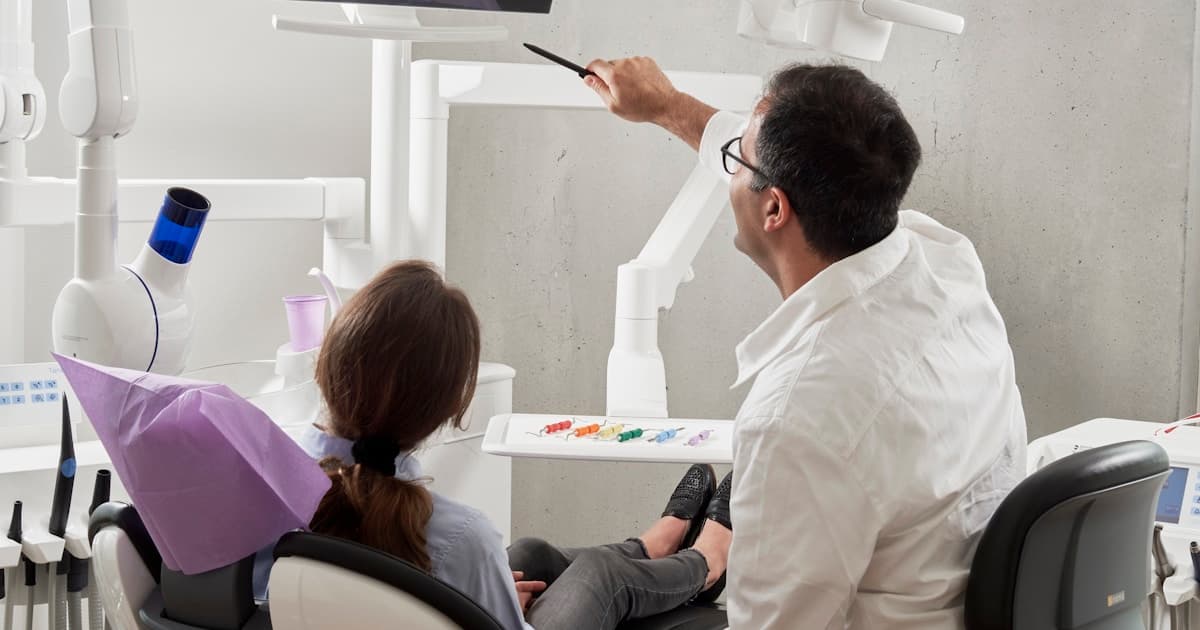
To become a dentist in Canada, you must earn either a Doctor of Dental Surgery (DDS) or a Doctor of Dental Medicine (DMD) degree from one of Canada's 10 accredited dental schools. Despite the different names, DDS and DMD are identical degrees: both require the same curriculum, are accredited by the same body (CDAC, the Commission on Dental Accreditation of Canada), and lead to the same licensing process. Which name a school uses is simply a historical convention.
Source: Association of Canadian Faculties of Dentistry (ACFD), "Our Schools Programs", acfd.ca/training-programs/our-schools-programs; DATCrusher, "List of Canadian Dental Schools", boosterprep.com/cdat/study-guide/list-of-canadian-dental-schools
The 10 Dental Schools
| School | Degree | Duration | Approx. Class Size | Language |
|---|---|---|---|---|
| University of Toronto | DDS | 4 years | ~96 | English |
| Western University | DDS | 4 years | ~56 | English |
| UBC | DMD | 4 years | ~64 | English |
| University of Alberta | DDS | 4 years | ~31 | English |
| University of Saskatchewan | DMD | 4 years | ~36 | English |
| University of Manitoba | DMD | 4 years | ~29 | English |
| Dalhousie University | DDS | 4 years | ~44 | English |
| McGill University | DMD | 4 years | ~38 | English |
| Universite de Montreal | DMD | 5 years | ~85 | French |
| Universite Laval | DMD | 4 years | ~48 | French |
Source: ACFD, "Our Schools Programs", acfd.ca; individual school admissions pages, 2025-2026 cycle
Class sizes from each school's official admissions page, 2025-2026 cycle. Université de Montréal does not publish its class size publicly; ~85 is a third-party estimate.
Note: Universite de Montreal's program is unique at 5 years (all others are 4). The 5th year includes a mandatory Master's in Oral Sciences component. All other schools award a standalone DDS/DMD in 4 years.
Total seats across all 10 schools: approximately 395 per year for English-language programs, plus approximately 133 for French-language programs. For context, Canada's 10 dental schools produce roughly 530 new dentists each year to serve a population of over 40 million.
The Full Pathway: High School to Licensed Dentist
Step 1: High School (Grade 11-12)
There are no dental-specific high school requirements, but you need strong grades in the sciences that will become university prerequisites. Take Biology, Chemistry, Physics, and Math (including Calculus if available). These are required for admission to university Life Science or general science programs, which is where most future dentists begin.
Step 2: Undergraduate Studies (2-3 years minimum)
Dental school does not require a specific undergraduate major. However, you must complete prerequisite courses that typically include: biology, general chemistry, organic chemistry, biochemistry, and physics. Some schools also require English, statistics, or physiology. These prerequisites map well to Life Science, Biomedical Science, or general science programs at most Canadian universities. A student in Life Science will complete most dental school prerequisites automatically within the first two years.
Most dental schools require a minimum of 2 years (60 credits) of undergraduate coursework before applying. The University of Toronto requires 3 full years. However, a significant number of admitted students hold a completed bachelor's degree (4 years). You do not need to finish your bachelor's to apply, but having a degree provides a safety net if dental school admission does not work out.
Source: University of Toronto, Faculty of Dentistry, "DDS Academic Requirements", dentistry.utoronto.ca/prospective-students/undergraduate/DDS; UBC Faculty of Dentistry, "DMD Admissions Procedures", dentistry.ubc.ca/education/dmd/dmd-admission-procedures; University of Saskatchewan, "Dentistry Admissions", admissions.usask.ca/dentistry.php
Step 3: The DAT (Dental Aptitude Test)
All English-language Canadian dental schools require the Canadian DAT, administered by the Canadian Dental Association (CDA). The test has four sections: Manual Dexterity, Perceptual Ability, Reading Comprehension, and a Survey of Natural Sciences (biology, general chemistry, organic chemistry). The DAT is scored on a scale of 1 to 30. No test taker has ever scored a perfect 30. The national average is approximately 17 (50th percentile), a score of 20 is considered competitive (roughly 80th percentile), and 22 or above is very competitive (roughly 90th percentile or higher). The DAT is offered twice per year (February and November). Scores are valid for 3 years. French-language schools have their own testing requirements.
Source: Canadian Dental Association, "Dental Aptitude Test", cda-adc.ca/en/becoming/dat; DATCrusher, "How Is the Canadian DAT Scored?", boosterprep.com/cdat/study-guide/datcrusher-how-is-the-canadian-dat-scored; Masterstudent.ca, "DAT Score", masterstudent.ca/dat-score
Step 4: Dental School (4 years)
The dental program itself is 4 years (5 at Universite de Montreal). Years 1 and 2 focus on foundational biomedical sciences, preclinical simulation labs, and early patient contact. Years 3 and 4 shift to intensive clinical practice, where students treat real patients under supervision. By graduation, students have completed hundreds of clinical procedures.
Step 5: NDEB Licensing and Provincial Registration
After graduating from a Canadian dental school, you must pass the NDEB (National Dental Examining Board of Canada) certification exams to practice. The NDEB process for Canadian graduates consists of a Written Examination and an OSCE (Objective Structured Clinical Examination, a hands-on simulated patient exam). Canadian dental graduates do not need to go through the longer Equivalency Process, which is designed for internationally trained dentists. After passing the NDEB exams, you register with your province's dental regulatory authority (e.g., Royal College of Dental Surgeons of Ontario). The entire process from graduation to licensed practice typically takes 3 to 6 months.
Source: National Dental Examining Board of Canada (NDEB), "So, You Want to Be a Dentist in Canada", Sep 2025, ndeb-bned.ca
Total timeline: High school graduation, then 2-3 years undergraduate, then 4 years dental school, then 3-6 months NDEB licensing. Total: approximately 7 to 8 years from high school to licensed dentist.
The Admission Reality: How Competitive Is It?
Dental school admission in Canada is among the most competitive of all professional programs. Across all 10 schools, there are only about 530 seats per year, and thousands of qualified applicants compete for them.
What the Numbers Look Like
The University of Toronto's 2025 admitted class had a cumulative GPA of 3.96 (on a 4.0 scale) and average DAT scores of 24 on the Academic Average (AA) section and 23 on the Perceptual Ability Test (PAT). To put the DAT score in perspective: the national average is 17, a competitive score is 20, and 24 places these admitted students roughly in the top 5% of all test takers. These are averages of admitted students, not minimums. The minimum GPA to apply is 3.0, but the competition pushes the actual admitted average to near-perfect.
Source: University of Toronto, Faculty of Dentistry, DDS admissions page, 2025 cycle, dentistry.utoronto.ca/prospective-students/undergraduate/DDS
The University of Saskatchewan reported mean accepted DAT averages for 2026: Saskatchewan residents 21.88, out-of-province applicants 23.89. The gap illustrates the significant in-province advantage that most Canadian dental schools give to local residents.
Source: University of Saskatchewan, College of Dentistry, Admissions page, 2026 cycle, admissions.usask.ca/dentistry.php
The In-Province Advantage
This is critical for families to understand: most Canadian dental schools heavily favor applicants who reside in the same province as the school. UBC, Saskatchewan, Manitoba, Dalhousie, Alberta, and the Quebec schools all give priority to in-province applicants. Out-of-province applicants face significantly higher GPA and DAT thresholds. The only exceptions are the two Ontario schools (University of Toronto and Western University), which have no in-province preference and treat all Canadian applicants equally. This means Ontario students have the hardest time getting into dental school, because their two home-province schools do not give them preference, and every other province's schools do favor their own residents.
Source: Masterstudent.ca, "Dental School Acceptance Rates in Canada", Dec 2025, masterstudent.ca/dental-school-acceptance-rates-in-canada
The Interview
All dental schools require an interview. Most use structured formats (MMI or CDA-style interviews) that assess communication skills, ethical reasoning, empathy, and understanding of the dental profession. GPA and DAT scores get you to the interview stage; the interview determines whether you receive an offer. Dental shadowing experience (typically 30+ hours) is highly recommended by most schools and may be required by some.
Citizenship Requirements and Total Cost
Who Can Apply?
Citizenship and residency requirements vary by school. Most Canadian dental schools require applicants to be Canadian citizens or permanent residents. A few accept international students.
| School | International Students? | Notes |
|---|---|---|
| University of Toronto | Yes | Accepts international applicants; significantly higher tuition (~$90K/yr vs ~$45K/yr domestic) |
| UBC | Yes | Accepts international applicants; must meet all admission requirements plus student visa requirements |
| Western University | Canadian/PR only | Must be Canadian citizen or permanent resident |
| University of Alberta | Primarily Canadian/PR | Primarily Canadian/PR; up to 2 international "Student Visitor" seats |
| University of Saskatchewan | Primarily Canadian/PR | Primarily Canadian/PR; international students may apply via AADSAS |
| University of Manitoba | Canadian/PR only | Must be Canadian citizen or permanent resident |
| Dalhousie University | Limited | Preference for Atlantic Canada residents, but applications from other provinces and countries are considered |
| McGill University | Yes | Accepts international students (separate applicant category); French proficiency required by Year 3 |
| U de Montreal | Limited | Priority to Quebec residents; French proficiency required |
| U Laval | Limited | Priority to Quebec residents; French proficiency required |
Source: UBC Faculty of Dentistry, DMD Admissions Procedures, dentistry.ubc.ca/education/dmd/dmd-admission-procedures; UofT Faculty of Dentistry, DDS admissions page, dentistry.utoronto.ca; University of Alberta, Mike Petryk School of Dentistry, DDS admissions page (up to 2 international Student Visitor seats); University of Saskatchewan, Dentistry Admissions (International applicants via AADSAS), admissions.usask.ca/dentistry.php; Dalhousie University Academic Calendar (applications from other provinces and countries considered); McGill University, DMD Applicant Categories page (International citizen category); Masterstudent.ca, dental school acceptance rates analysis, Dec 2025
How Much Does It Cost?
Dental school is one of the most expensive professional programs in Canada. Unlike many programs, dental students must purchase mandatory instruments, equipment, and supplies from the university each year, often adding $10,000 to $20,000+ on top of tuition. UofT's tuition figures differ by page: its DDS admissions page (2024 rates) lists approximately $50,550/year for domestic students and approximately $132,327/year for international students, while its FAQ page summarizes these as roughly $45,000 domestic and $90,000 international (including academic and instrument fees). Using the more detailed DDS admissions page figures, over 4 years a domestic UofT student will pay approximately $202,000 in tuition and fees alone, before living expenses, and an international student approximately $529,000.
Source: University of Toronto, Faculty of Dentistry, DDS admissions page, 2024 rates, dentistry.utoronto.ca/prospective-students/undergraduate/DDS; University of Toronto, Faculty of Dentistry, "Fees for Tuition and Instruments", dentistry.utoronto.ca/node/2264; Masterstudent.ca, "Dental School Costs in Canada", Dec 2025, masterstudent.ca/dental-school-costs-in-canada
Quebec schools are significantly cheaper for Quebec residents (total 4-year tuition around $30,000 to $40,000), but much higher for out-of-province Canadians (around $100,000+). Western and Atlantic schools are similarly expensive: Dalhousie's 2025-2026 in-province tuition is approximately $30,700/year, plus mandatory instrument fees of $13,000 to $27,000/year depending on the year, bringing Year 1 total to approximately $59,000. The University of Saskatchewan's 2026-2027 in-province Year 1 total (tuition, program fee, and equipment rental) is approximately $63,500. When adding instruments, books, supplies, and living expenses over 4 years, the total investment to become a dentist in Canada ranges from approximately $150,000 (in-province Quebec) to over $600,000 (international at UofT with Toronto living costs).
Source: Dalhousie University, 2025-2026 Medicine and Dentistry Fee Schedule, dal.ca; University of Saskatchewan, Dentistry Admissions, Tuition Estimates, 2026-2027, admissions.usask.ca/dentistry.php
Dentistry vs Medicine: How Do They Compare?
Many families consider both dentistry and medicine. The undergraduate pathway is nearly identical (same prerequisite courses, similar GPA expectations), but the paths diverge significantly after professional school.
| Dentistry (DDS/DMD) | Medicine (MD) | |
|---|---|---|
| Standardized test | DAT (Dental Aptitude Test) | MCAT (Medical College Admission Test) |
| Professional school | 4 years | 3-4 years |
| Residency after graduation | Optional (only for specialization) | Mandatory (2-5+ years, depending on specialty) |
| Time to independent practice | ~7-8 years from high school | ~9-13+ years from high school |
| Residency pay (if applicable) | N/A for general dentistry | ~$60,000-$80,000/year during residency |
| First year of full earning potential | Age ~25-26 | Age ~29-35 depending on specialty |
| Typical income (general practice) | $150,000-$300,000+/year | $250,000-$400,000+/year (after residency) |
| Private practice ownership | Can open clinic immediately after licensing | Must complete residency first |
| On-call / hospital shifts | Rare (most work regular clinic hours) | Common, especially during residency |
| Work-life balance | Generally predictable schedule | Highly variable, especially in early career |
The Financial Timeline: Who's Ahead by Age 30?
Consider two students who both graduate high school at 18. The future dentist completes 3 years of undergrad (age 21), 4 years of dental school (age 25), passes NDEB (age 25-26), and begins earning $150,000+ in private practice. By age 30, they have earned approximately 4-5 years of full dentist income. The future family physician completes 4 years of undergrad (age 22), 4 years of medical school (age 26), and 2 years of mandatory residency at ~$65,000/year (age 28). They begin earning full physician income at 28. By age 30, they have earned 2 years of full physician income, plus 2 years of residency pay. Meanwhile, the future surgeon who does a 5-year residency does not reach full earning potential until age 31.
If your child is equally interested in both dentistry and medicine, dentistry offers a faster path to financial independence, more predictable work hours, and the option to own a clinic immediately. If they specifically want to treat systemic disease, perform surgery, or pursue hospital-based research, medicine is the path.
Dentist Salary and Return on Investment
The Government of Canada Job Bank reports dentist income data using the 2021 Census (not the Labour Force Survey used for most occupations), because a large proportion of dentists are self-employed. This means the data captures both salaried dentists and practice owners, and includes part-time practitioners, which pulls the median lower than what a full-time dentist typically earns.
| Province | Low (CAD/yr) | Median (CAD/yr) | High (CAD/yr) |
|---|---|---|---|
| Canada (national) | $32,867 | $110,000 | $228,000 |
| Alberta | $32,867 | $120,000 | $270,000 |
| Ontario | $37,561 | $104,000 | $210,000 |
| British Columbia | $37,929 | $84,000 | $214,000 |
| Quebec | $33,109 | $106,000 | $228,000 |
| Manitoba | n/a | $116,000 | n/a |
| Nova Scotia | n/a | $126,000 | n/a |
| New Brunswick | n/a | $132,000 | n/a |
| Newfoundland | n/a | $180,000 | n/a |
| Saskatchewan | n/a | $110,000 | n/a |
Source: Government of Canada Job Bank, Dentist Wages (NOC 31110), 2021 Census, Statistics Canada, published Nov 19, 2025, jobbank.gc.ca/marketreport/wages-occupation/4092/ca
These census figures understate what full-time practicing dentists actually earn. Indeed Canada reports an average of approximately $199,529/year based on 647 self-reported salaries as of March 2026. Industry sources estimate that established general dentists in private practice typically earn $150,000 to $300,000+ per year, while dental specialists (orthodontists, oral surgeons, periodontists) can earn $300,000 to $500,000+.
Source: Indeed Canada, Dentist Salary page, Mar 2026, ca.indeed.com; DATCrusher, "Dental School Costs in Canada", boosterprep.com; superprof.ca, "Dentist Salary in Canada", Oct 2025, citing Economic Research Institute average of $191,543/yr
Is It Worth the Investment?
A domestic student at UofT investing approximately $202,000 in tuition (plus ~$80,000 in living costs over 4 years, totaling ~$282,000) who earns $180,000/year in their first year of practice would recover their total educational investment within roughly 2-3 years of full-time work. As of December 2025, dentists working in rural areas and population centres with fewer than 30,000 residents can also apply for federal student loan forgiveness of up to $60,000 over five years.
Source: Government of Canada, Federal Student Loan Forgiveness for Dentists, effective Dec 31, 2025, admissions.usask.ca/dentistry.php (referencing federal program)
Risks and Backup Plans
The Reality: Most Applicants Don't Get In
With only ~530 seats nationwide and thousands of applicants, the acceptance rate at many Canadian dental schools is in the single digits. Some applicants apply multiple times over 2-3 years before gaining admission, while others never get in. This is a risk that families must plan for.
Backup Plan 1: Apply to US Dental Schools
Approximately 15 US dental schools are considered "Canadian-friendly," meaning they accept the Canadian DAT and treat Canadian applicants as out-of-state students rather than international students. Many Canadian students who cannot secure a seat domestically pursue their DDS/DMD in the US and return to Canada to practice (after passing the NDEB exams). US dental school tuition for out-of-state students typically ranges from $60,000 to $90,000 USD per year.
Source: BeMo Academic Consulting, "Canadian-Friendly US Dental Schools", Jan 2026, bemoacademicconsulting.com/blog/canadian-friendly-us-dental-schools; DATCrusher, "Canadian-Friendly American Dental Schools", boosterprep.com
Backup Plan 2: Dental Hygienist
Dental hygiene is a strong alternative that requires significantly less time and money. Programs are typically 2-3 years (diploma or bachelor's), and licensed dental hygienists in Canada earn $32 to $60 per hour nationally, with Alberta dental hygienists earning $50 to $75 per hour. The work involves preventive care (cleanings, X-rays, patient education) rather than restorative procedures.
Source: Government of Canada Job Bank, Dental Hygienist Wages (NOC 32111), Nov 2025, jobbank.gc.ca/marketreport/wages-occupation/18315/ca
Important note for families: dental hygiene is NOT a downgrade or direct fallback from the dentist track. It is a completely separate career entered through a completely separate program. The most common pathway is a 2-3 year college diploma (at institutions like George Brown, Algonquin, or Fanshawe), applied to directly from high school. A few universities (University of Alberta, UBC, Dalhousie, University of Manitoba) offer a bachelor's degree in dental hygiene, but these are standalone professional programs with their own admission process, not a major within a science faculty. If your child has spent 2-3 years in university Life Science preparing for dental school and is not admitted, switching to dental hygiene means starting a new program from scratch. Their university biology and chemistry courses generally do not count toward a hygiene diploma. Their university years are not wasted if they complete a bachelor's degree (which opens other career doors), but those courses do not shortcut the dental hygiene pathway.
Backup Plan 3: Other Health Professions
Students who complete the undergraduate prerequisites for dental school have a strong science foundation that applies to several other professional programs. However, not all of these are realistic fallbacks:
Medicine (MD) requires the MCAT and is equally or more competitive than dentistry. If your child was not admitted to dental school, medical school is not an easier target. Veterinary medicine has only 5 schools and approximately 450 seats in all of Canada, with strict provincial restrictions. It is arguably harder to get into than dentistry. Optometry has only 2 English-language programs in Canada (University of Waterloo and Universite de Montreal), making it similarly seat-limited.
The genuinely more accessible alternatives are: pharmacy (PharmD), where the University of Toronto has no cap on international students and admission thresholds are lower than dentistry; and graduate programs (MSc/PhD) in oral health sciences, biomedical sciences, or craniofacial research, which offer a research career path with funded positions. These are realistic pivots that use the same science prerequisites. Medicine, veterinary medicine, and optometry share the same foundation courses, but families should understand that switching to these programs means competing for equally scarce seats, not stepping down to an easier option.
Backup Plan 4: Apply Early, But Know the Risk of Entering Without a Degree
Apply to dental school as soon as you meet the minimum prerequisites (2 years at most schools, 3 years at UofT). There is no downside to applying early: if you are not admitted, you simply continue your undergraduate degree and reapply the following year. Nothing is lost except the application fee. However, if you are admitted and enter dental school without having completed your bachelor's degree, be aware that you will have no undergraduate degree to fall back on. If for any reason you later need to leave the dental program (academic difficulty, injury, change of direction), you would have neither a dental degree nor a bachelor's degree. Some families choose to complete the full 4-year bachelor's first as a safety net. This is a personal decision, not a requirement.
Frequently Asked Questions
Is there a difference between DDS and DMD?
No. DDS (Doctor of Dental Surgery) and DMD (Doctor of Dental Medicine) are identical degrees accredited by the same body (CDAC). Which name a school uses is a historical convention. Both lead to the same licensing process, the same scope of practice, and the same career opportunities.
Can international students study dentistry in Canada?
It depends on the school. The University of Toronto and UBC accept international students. Most other English-language schools require Canadian citizenship or permanent residency. International students should verify directly with each school and be aware that tuition is significantly higher (approximately $90,000/year at UofT).
What undergraduate major is best for dental school?
There is no required major. However, Life Science programs align most naturally with dental school prerequisites because they cover biology, chemistry, organic chemistry, and biochemistry in the first two years. Students from other science programs can also meet the requirements with some extra planning.
How much does it cost to become a dentist in Canada?
Total costs range widely: approximately $150,000 for an in-province Quebec student to over $600,000 for an international student at the University of Toronto (calculated using the UofT DDS admissions page 2024 rates, including tuition, instruments, and living expenses over 4 years). Most domestic students outside Quebec can expect to invest $200,000 to $300,000 total.
Is dentistry worth it financially?
For most graduates, yes. A domestic student investing approximately $260,000 total (tuition + living) who earns $180,000/year in their first year of practice can recover their investment within 2-3 years. Dentistry also offers faster financial independence than medicine because there is no mandatory residency for general practice. However, the risk of not being admitted (single-digit acceptance rates at some schools) is a factor families must plan for.
Considering dentistry for your child?
Oak Education helps families plan university pathways, from choosing the right undergraduate major to building a competitive dental school application.
Start Free Assessment