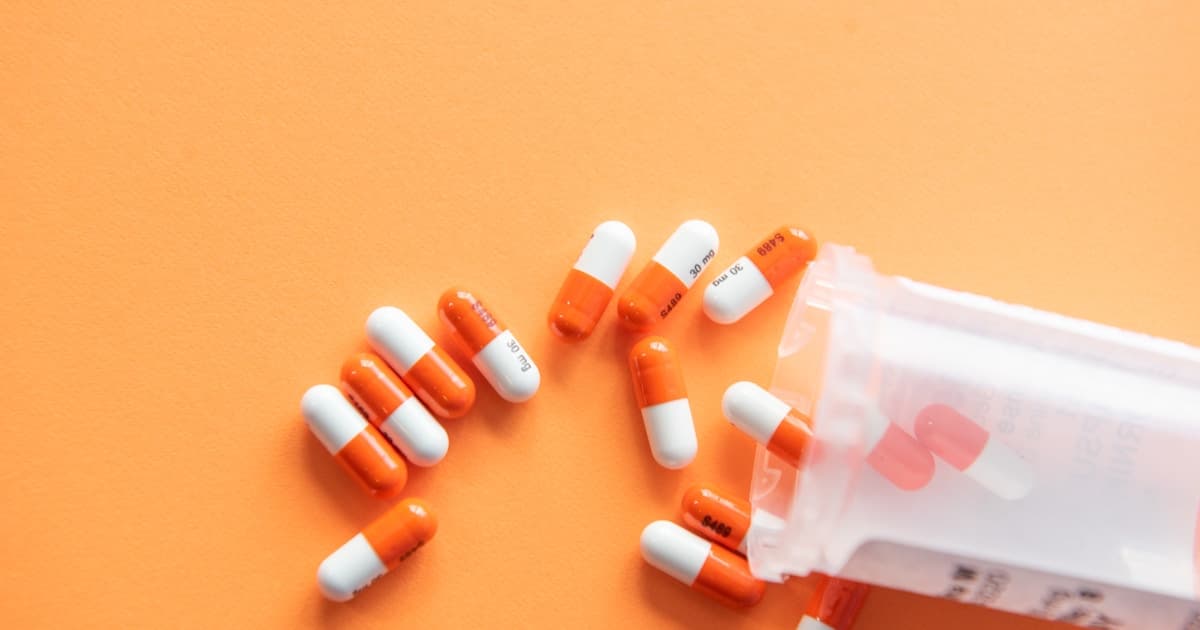
What Is PharmD?
PharmD (Doctor of Pharmacy) is the entry-to-practice professional degree for pharmacists in Canada. Since 2020, all Canadian pharmacy schools have transitioned from the older BScPhm (Bachelor of Science in Pharmacy) to the PharmD as the standard first professional degree, following a joint resolution by the Association of Faculties of Pharmacy of Canada (AFPC) and the Association of Deans of Pharmacy of Canada (ADPC).
Source: Canadian Pharmacists Association, "Doctor of Pharmacy Degree as an Entry-Level to Practice" position statement, referencing AFPC/ADPC Joint Resolution, February 2010, pharmacists.ca
Despite having "Doctor" in its name, PharmD is NOT a PhD or research doctorate. It is a clinical professional degree, comparable to an MD (Doctor of Medicine) or JD (Juris Doctor) in structure: its purpose is to train practitioners, not researchers. A PharmD graduate is qualified to dispense medications, provide drug therapy management, counsel patients, and in expanding-scope provinces like Alberta, even prescribe certain medications independently.
Canada has 11 accredited PharmD programs. More than 1,200 new pharmacists graduate from these programs each year.
Source: Association of Faculties of Pharmacy of Canada (AFPC), "About AFPC", accessed May 2026, afpcpharmacy.ca/about-afpc-1
The 11 PharmD Programs at a Glance
| School | Duration | Approx. Annual Seats | Language |
|---|---|---|---|
| University of Toronto | 3 years | ~250 | English |
| University of British Columbia | 4 years | ~224 | English |
| University of Waterloo | 4 years | ~120 | English |
| University of Alberta | 4 years | N/A | English |
| University of Saskatchewan | 4 years | ~90 | English |
| University of Manitoba | 4 years | N/A | English |
| Dalhousie University | 4 years | N/A | English |
| Memorial University | 4 years | N/A | English |
| University of Ottawa | 4 years | N/A | French |
| Universite de Montreal | 4 years | ~200 | French |
| Universite Laval | 4 years | N/A | French |
Source: CAPSI (Canadian Association of Pharmacy Students and Interns), "How to Apply to Pharmacy School", accessed May 2026, capsi.ca/pharmacy-school; UofT Leslie Dan Faculty of Pharmacy, "Our PharmD Program", accessed May 2026, pharmacy.utoronto.ca
PharmD Admission Requirements
PharmD is NOT a direct-entry-from-high-school program (with one exception: Waterloo's CAP). Most programs require at least 2 years of undergraduate coursework before applying.
Common Prerequisites (University of Toronto)
At the University of Toronto's Leslie Dan Faculty of Pharmacy, applicants need a minimum of 8 full-course equivalents (FCEs) at university level, including 1.0 FCE Biology, 1.5 FCE Chemistry, 1.0 FCE Math (with at least 0.5 FCE in Calculus), and 1.0 FCE Humanities/Social Science. The minimum cumulative university average is 70% (equivalent to B- at UofT), though the actual competitive threshold is typically higher depending on the applicant pool. All prerequisite courses must be completed within 10 years. Applicants must also complete the CASPer situational judgment test, and approximately 700 applicants are selected for the Online Individual Assessment stage.
Source: University of Toronto, Leslie Dan Faculty of Pharmacy, "PharmD Academic Requirements" and "Admissions Overview", 2026 admission cycle, pharmacy.utoronto.ca/programs/doctor-pharmacy-pharmd/pharmd-academic-requirements
How Other Schools Differ
UBC requires a minimum overall average of 70% calculated on the last 60 credits, plus 60 transferable credits of post-secondary coursework. The University of Ottawa requires a minimum 75% (B+) overall average with at least 2 years of full-time university study (60 credits). The University of Saskatchewan requires a minimum overall average of 70% and 60 U of S credit units, with admission weighted as: academic performance 60%, CASPer 30%, and personal video interview 10%.
Source: UBC Academic Calendar, Entry-to-Practice PharmD Admission, 2026/27, vancouver.calendar.ubc.ca; University of Ottawa, Faculty of Medicine, PharmD Application Process, 2026 cycle, uottawa.ca/faculty-medicine/pharmd/admissions/application-process; University of Saskatchewan, Pharmacy Admissions, 2026 cycle, admissions.usask.ca/pharmacy.php
Which Undergraduate Program Should You Choose?
PharmD does not require a specific undergraduate major. However, the prerequisite courses (biology, chemistry, organic chemistry, calculus, and humanities) align almost perfectly with the first two years of most Life Science programs at Canadian universities. The University of Toronto's Leslie Dan Faculty of Pharmacy states that its academic subject requirements "align well with the 1st and 2nd year subject requirements of many Life and Physical Science programs," and that most applicants come from a Life Science or general science program.
A note on terminology: "Physical Science" here refers to a UofT admission category (which includes Chemistry, Physics, and Mathematics majors), not a standalone major. Students from Chemistry-heavy programs can meet the chemistry prerequisites easily, but would still need to add Biology courses. Life Science is the most natural fit because its standard first- and second-year curriculum covers both biology and chemistry prerequisites simultaneously, without requiring extra courses. In other words, a Life Science student completes PharmD prerequisites almost automatically, while students in other programs may need to plan additional coursework.
Students in Health Science, Biochemistry, or Biomedical Science programs can also meet the prerequisites with ease. Students from non-science backgrounds (arts, engineering, business) can still apply, but will likely need to take additional science courses to fill prerequisite gaps. No Canadian PharmD program publishes a breakdown of admitted students by undergraduate major. What matters is completing the required courses with a strong GPA, not the name of your program.
Source: University of Toronto, Leslie Dan Faculty of Pharmacy, "Information for High School Students", 2026 cycle, pharmacy.utoronto.ca/programs/doctor-pharmacy-pharmd/admission-requirements/academic-requirements/information-high-school-students
Waterloo's CAP: The Only High School Entry Path
The University of Waterloo offers the Conditional Admission to Pharmacy (CAP) program, the only pathway allowing high school students to secure conditional admission to a PharmD program in Canada. Students complete 2 years of pre-pharmacy coursework at Waterloo before entering the PharmD, effectively guaranteeing a seat if academic conditions are met. Of Waterloo's approximately 120 PharmD seats per year, around 40 come from CAP students, with the remaining 80 filled by regular applicants who completed prerequisites at other institutions. Waterloo is also Canada's only PharmD co-op program, providing 18 months of work-integrated learning by graduation.
Source: University of Waterloo, School of Pharmacy, "Doctor of Pharmacy (PharmD) Program", accessed May 2026, uwaterloo.ca/pharmacy/doctor-pharmacy-pharmd; CAPSI, "How to Apply to Pharmacy School", capsi.ca/pharmacy-school — "120 new PharmD students annually, including 40 students from our Conditional Admission to Pharmacy (CAP) program"
Typical timeline: High school, then 2 years undergraduate prerequisites, then 3-4 years PharmD, then PEBC exams, then licensure. Total: approximately 6-7 years from high school to licensed pharmacist.
Citizenship and Residency Requirements
This is the single most important factor for international families considering PharmD in Canada. Policies vary dramatically by school.
| School | International Students? | Details |
|---|---|---|
| University of Toronto | Yes, no cap | No limit to the number of qualified international students who may be admitted |
| University of Waterloo | Yes (limited) | International students eligible through regular stream |
| UBC | No | Must be Canadian citizen or permanent resident by application deadline |
| University of Ottawa | No | Must be Canadian citizen or PR at time of application. No exceptions. |
| U of Saskatchewan | Limited | 76 in-province seats, 14 out-of-province. Must be Canadian citizen or PR. |
| U de Montreal | Limited | Priority to French-speaking Canadians from Ontario and Maritime provinces |
| U Laval | Limited | Must pass French Admission Test (score at least 850/990) |
Source: UofT Leslie Dan Faculty, "Candidates who have studied outside Ontario", 2026 cycle, pharmacy.utoronto.ca; UOttawa Faculty of Medicine, PharmD FAQ, uottawa.ca/faculty-medicine/pharmd/admissions/faqs
Even if you are admitted to and graduate from a PharmD program, you still cannot practice pharmacy without legal status to work in Canada. To work as a pharmacist in Ontario, for example, you must be a Canadian citizen, permanent resident, or hold a valid work permit.
Source: Ontario College of Pharmacists, "Canadian Citizenship or Legal Status in Canada", ocpinfo.com/registration/registration-requirements/legal-status
The PEBC Licensing Process
After completing a Canadian PharmD program, graduates must pass the PEBC (Pharmacy Examining Board of Canada) Qualifying Examination to earn a Certificate of Qualification. All Canadian PharmD programs are accredited by CCAPP (Canadian Council for Accreditation of Pharmacy Programs), and their graduates proceed directly to the Qualifying Examination with no preliminary exam required. This certificate is required for licensure in all provinces except Quebec, which has its own process through the Ordre des pharmaciens du Quebec (OPQ).
Source: PEBC, Qualifying Examination General Information, pebc.ca/pharmacists/qualifying-examination/general-information
Two-Part Qualifying Exam
The PEBC Qualifying Exam consists of Part I (multiple-choice questions, computer-based, single day) and Part II (OSCE, an in-person Objective Structured Clinical Examination using simulated practice scenarios). Both parts must be passed within 3 years. Candidates have a maximum of 3 attempts per part, with a possible petition for a 4th attempt after providing documentation of remediation.
2025 Update for International Graduates
PEBC has a separate exam called the Evaluating Examination, but it is only for international pharmacy graduates (those who earned their pharmacy degree outside Canada). Canadian PharmD graduates have never been required to take it. Previously, even international graduates from ACPE-accredited (Accreditation Council for Pharmacy Education, the US accreditation body) or CCAPP-accredited (Canadian Council for Accreditation of Pharmacy Programs) programs had to pass this additional exam. As of May 13, 2025, these graduates are now exempt and can proceed directly to the Qualifying Examination, the same path Canadian graduates have always followed.
Source: Pharmacists' Gateway Canada, "PEBC Certificate of Qualification", updated Nov 2025, pharmacistsgatewaycanada.ca/before-you-start/pebc-certificate-of-qualification
When and How Long
Canadian PharmD graduates can sit Part I (MCQ) as soon as exams are offered after graduation. The MCQ is administered approximately three times per year (typically March, June, and November), and the OSCE is offered approximately twice per year (typically March and September). Both parts must be passed within three years. In the best case, a graduate who passes both parts on the first attempt can complete the PEBC process within 6 to 12 months of graduating. After obtaining the Certificate of Qualification, provincial registration (including any required internship or jurisprudence exam) typically takes an additional 3 to 5 months. Altogether, a PharmD graduate can expect to be fully licensed approximately 9 to 17 months after graduation.
During this waiting period, PharmD graduates are not idle. After graduation, they can register as intern pharmacists (pharmacy interns) with their provincial regulatory body. As interns, they can practice pharmacy under the direct supervision of a licensed pharmacist, including dispensing medications, counselling patients, and performing clinical tasks. They are paid positions. Interns simply cannot practice independently or serve as a pharmacy manager until they obtain full licensure.
Source: PEBC, Examination Dates and Fees page, pebc.ca/general-informations/examination-dates-and-fees; Ontario College of Pharmacists, registration timeline, ocpinfo.com; Saskatchewan College of Pharmacy Professionals, "Registration - Pharmacist Interns", saskpharm.ca/site/registration/pharmacistinterns; College of Pharmacists of Manitoba, Internship Manual, Feb 2023, cphm.ca
Pharmacist Salary in Canada
Pharmacists are among the highest-paid healthcare professionals in Canada, with strong wage consistency across provinces.
| Province | Low (CAD/hr) | Median (CAD/hr) | High (CAD/hr) |
|---|---|---|---|
| Canada (national) | $40.00 | $55.49 | $67.00 |
| Ontario | $37.00 | $53.85 | $65.00 |
| British Columbia | $40.87 | $52.00 | $64.00 |
| Alberta | $41.24 | $55.00 | $62.00 |
| Quebec | $41.03 | $63.00 | $75.00 |
| Manitoba | $50.00 | $56.00 | $69.23 |
| Saskatchewan | $35.18 | $55.33 | $62.00 |
| Nova Scotia | $41.25 | $51.00 | $58.97 |
Source: Government of Canada Job Bank, Pharmacist Wages (NOC 31120), Statistics Canada Labour Force Survey, reference period 2023-2024, published Nov 19, 2025, jobbank.gc.ca/marketreport/wages-occupation/18196/ca
At the national median of $55.49/hour, a full-time pharmacist earns approximately CAD $115,000/year. 89.4% of pharmacists in Canada receive at least one type of non-wage benefit, including pension plans, dental/medical insurance, and leave entitlements.
Additional data from other sources: Indeed Canada reports an average of CAD $55.26/hour across 3,300+ reported salaries. PayScale Canada reports an average of CAD $48.58/hour based on 293 salary profiles, with a total pay range of CAD $81,000 to $122,000/year.
Source: Indeed Canada, Pharmacist Salary page, updated Apr 6, 2026, ca.indeed.com/career/pharmacist/salaries; PayScale Canada, Pharmacist Hourly Rate, last updated Oct 3, 2025, payscale.com/research/CA/Job=Pharmacist/Hourly_Rate
What Is Pharmaceutical Sciences?
Pharmaceutical Sciences is a fundamentally different path from PharmD. It is a 4-year bachelor's degree (BPSc) that focuses on the science behind drug discovery, development, formulation, and evaluation, NOT on clinical pharmacy practice or patient care.
UBC's Bachelor of Pharmaceutical Sciences is the only English-language undergraduate pharmaceutical sciences program in Canada. The only other program of this kind is the Baccalaureat en sciences biopharmaceutiques (BBPS) at Universite de Montreal, a French-language program launched in 2009 that focuses on drug development and has graduated 319 students as of 2020. UBC launched its BPSc in September 2020. For English-speaking students, UBC is the only option. The cohort is small, approximately 80 students per year, and the program sits within the Faculty of Pharmaceutical Sciences alongside the PharmD, but the two degrees lead to completely different careers.
Source: UBC Faculty of Pharmaceutical Sciences, "UBC to launch new Bachelor of Pharmaceutical Sciences program", Nov 2019, pharmsci.ubc.ca/news/ubc-launch-new-bachelor-pharmaceutical-sciences-program; Universite de Montreal, Faculty of Pharmacy, "Baccalaureat en sciences biopharmaceutiques", pharm.umontreal.ca; Pharmactuel, "Baccalaureat en sciences biopharmaceutiques de l'Universite de Montreal: deja 10 ans", 2021
Source: UBC Faculty of Pharmaceutical Sciences, "Bachelor of Pharmaceutical Sciences Degree", pharmsci.ubc.ca/programs/bachelor-pharmaceutical-sciences-degree
What You Study
The curriculum covers pharmacology, medicinal chemistry, drug delivery systems, analytical chemistry, formulation science, nanomedicine, and diagnostics. There is heavy emphasis on laboratory skills and research methodology. The program equips graduates for technical positions in the discovery, development, and production areas of the pharmaceutical, life sciences, biotechnology, and natural products industries.
Three Streams in Year 4
Students choose from: (1) General studies, which is coursework only and serves as the default stream; (2) Experiential Option with Research, which includes a research project equivalent to one full-time term; or (3) Experiential Option with Honours, which adds 12 additional credits to the research stream. There is also a Practicum option, which places students with a government organization or industrial partner (e.g. biotech, drug, nutraceutical, or personal care company) for one term.
Source: UBC Academic Calendar, BPSc Degree Requirements, 2026/27, vancouver.calendar.ubc.ca/faculties-colleges-and-schools/faculty-pharmaceutical-sciences/bachelor-pharmaceutical-sciences/degree-requirements
Admission
There is no direct Year 1 admission into BPSc. Students first complete Year 1 in a general science program at UBC (or at another institution), taking prerequisite courses in biology, chemistry, and other sciences. They then apply to transfer into BPSc starting at Year 2. High school students who want to target BPSc should apply to UBC's Faculty of Science for their first year, then apply to transfer after completing the prerequisites. For applicants entering in September 2027 (the 2027 Winter Session, or "2027W" in UBC terminology) or later, at least 24 credits including all stated prerequisite coursework is required. Admission includes a pre-recorded interview. The program is open to both domestic and international students. Competitive admission averages are reported at approximately 90%+, with a minimum baseline around 80%.
Source: UBC Faculty of Pharmaceutical Sciences, BPSc Admission Information, pharmsci.ubc.ca/programs/bachelor-pharmaceutical-sciences-degree/admissions-information; competitive average from GrantMe, Sep 2024, grantme.ca/blog/what-is-ubc-pharmaceutical-sciences-acceptance-rate; Uniscope reports ~92% avg and ~25% acceptance rate, uniscope.ca/university-of-british-columbia/pharmaceutical-sciences-bsc
BPSc vs BSc Pharmacology: Not the Same
UBC also offers a separate BSc in Pharmacology within the Faculty of Science. While both programs involve the study of drugs, they differ significantly in focus and career direction.
BSc Pharmacology focuses narrowly on drug mechanisms of action and pre-clinical research techniques at a molecular and cellular level. It is a research-oriented degree that prepares students primarily for graduate studies in pharmacology, or as a strong foundation for professional programs like medicine or dentistry. Most pharmacology graduates go on to further study rather than directly into industry.
The BPSc is broader and more industry-aligned, covering the full pipeline from drug discovery through formulation, manufacturing, regulatory approval, and commercialization. BPSc graduates are prepared for direct employment in the pharmaceutical, biotech, and life sciences industries, as well as for graduate studies. The BPSc sits in the Faculty of Pharmaceutical Sciences, while BSc Pharmacology sits in the Faculty of Science.
In short: Pharmacology asks "how does this drug work in the body?" while Pharmaceutical Sciences asks "how do we discover, make, test, and bring this drug to market?"
Source: UBC Undergraduate Programs, "Pharmacology", you.ubc.ca/ubc_programs/pharmacology
Career Pathways After a Pharmaceutical Sciences Bachelor's
A BPSc graduate CANNOT become a licensed pharmacist. The career pathways diverge completely from PharmD.
Pathway A: Graduate School (MSc/PhD)
The most common next step for BPSc graduates interested in research. UBC's Faculty of Pharmaceutical Sciences offers MSc and PhD programs with guaranteed minimum funding: MSc domestic students receive CAD $33,000/year, international students receive CAD $36,200/year (including a $3,200 International Tuition Award). PhD domestic students receive up to CAD $37,245/year, international students up to CAD $40,655/year. The PhD program has an average time to completion of 5.6 years and a graduation rate of 85.7%, based on 31 students admitted between 2012 and 2015.
BPSc graduates who pursue further study almost exclusively go the MSc/PhD route in pharmaceutical sciences or a related field, not PharmD. The two degrees serve different purposes: the BPSc is designed to feed into research and industry careers, while PharmD is designed to produce clinical practitioners. A student who completes a BPSc and then enters a PharmD would be restarting on a fundamentally different career track.
Source: UBC Faculty of Pharmaceutical Sciences, "Tuition, Funding and Awards", effective Sep 2026, pharmsci.ubc.ca/programs/msc-phd-degrees/tuition-funding-and-awards; completion statistics from UBC Graduate School, PhD in Pharmaceutical Sciences program profile, grad.ubc.ca/prospective-students/graduate-degree-programs/phd-pharmaceutical-sciences
Pathway B: Industry Directly with BPSc
The practicum stream places students with government or industry partners for one term. With the growth of BC's life sciences sector and increasing government investment, BPSc graduates have expanding employment opportunities. Typical roles include formulation scientist, quality control analyst, regulatory affairs specialist, analytical development scientist, and clinical research associate.
Pathway C: Pivot to Professional Programs
Some BPSc graduates pivot to professional programs such as medicine or dentistry, where the strong science foundation makes them competitive applicants. Applying to PharmD after a BPSc is technically possible but uncommon: students who want to become pharmacists would typically enter a PharmD program directly rather than completing a 4-year BPSc first. For families weighing science-track undergraduate options before professional school, see our Life Science vs Health Science guide.
Source: UBC Student Services, "Your Degree in Pharmacology", students.ubc.ca/career/your-degree/science/pharmacology
Career Pathways After BSc Pharmacology: A Different Direction
BSc Pharmacology is a separate program from BPSc, and it is available at multiple Canadian universities, not just UBC. McGill, the University of Toronto, McMaster, Western, and the University of Alberta all offer undergraduate Pharmacology programs within their Faculties of Science. While BSc Pharmacology and BPSc both involve the study of drugs, their graduates follow markedly different career paths.
Source: McGill University, "BSc Major Pharmacology", Dept. of Pharmacology and Therapeutics, mcgill.ca/undergraduate-admissions/program/pharmacology; University of Toronto, Dept. of Pharmacology and Toxicology, "Undergraduate Programs", pharmtox.utoronto.ca/undergraduate-programs; UBC, "Pharmacology", you.ubc.ca/ubc_programs/pharmacology
The Majority Pursue Medicine or Dentistry
Unlike BPSc, where graduates are primarily industry-bound, the majority of BSc Pharmacology graduates enter professional programs such as medicine (MD) or dentistry (DDS). UBC's own program page states that "the majority choose to enter into professional programs such as Medicine or Dentistry, while others choose to pursue further Law or Pharmacy training." McGill similarly describes the Pharmacology major as "excellent preparation for your graduate studies in biomedical or environmental sciences, or professional programs like medicine, dentistry, nursing, and veterinary sciences." In short, BSc Pharmacology functions as a strong pre-medical major with a drug science focus.
Graduate School in Pharmacology
Students who want to become professional pharmacologists (as opposed to clinical practitioners) typically pursue an MSc or PhD after their BSc. The University of Toronto states that "students intending to become pharmacologists will often find it helpful or even necessary to continue studying for a Master of Science degree or a Doctorate before choosing a professional career," and that "almost without exception, the well-trained pharmacologist holds an MSc or PhD degree." This means 3 to 6 years of additional study beyond the bachelor's.
Source: University of Toronto, Dept. of Pharmacology and Toxicology, "Careers in Pharmacology and Toxicology", pharmtox.utoronto.ca/careers-pharmacology-and-toxicology
How Does This Compare to BPSc?
| BSc Pharmacology | BPSc (Pharmaceutical Sciences) | |
|---|---|---|
| Primary career direction | Medicine, dentistry, or MSc/PhD in pharmacology | Pharmaceutical industry directly, or MSc/PhD in pharmaceutical sciences |
| Focus | How drugs work in the body (mechanisms of action) | How drugs are discovered, made, tested, and brought to market |
| Faculty | Faculty of Science | Faculty of Pharmaceutical Sciences |
| Availability | Multiple universities (UBC, McGill, UofT, McMaster, Western, Alberta) | UBC (English), Universite de Montreal (French) |
| Admission | Standard BSc major - declare after Year 1 within Faculty of Science | Separate transfer application into Year 2, competitive (~90%+ average) |
| Leads to pharmacist license? | No | No |
Neither BSc Pharmacology nor BPSc leads to a pharmacist license. If your goal is to become a licensed pharmacist, the only path is PharmD.
Salary Comparison: Pharmacist vs Pharmaceutical Scientist
| Career Path | Entry Level (CAD/yr) | Mid-Career (CAD/yr) | Senior (CAD/yr) | Education Required |
|---|---|---|---|---|
| Licensed Pharmacist | $81,000-$100,000 | $105,000-$120,000 | $130,000-$155,000+ | PharmD + PEBC |
| Pharma Scientist (BPSc + industry) | $63,500-$82,000 | $82,000-$108,000 | $108,000-$142,000 | BPSc (or + MSc) |
| Pharma Research Scientist (PhD) | $65,000-$85,000 | $105,000-$142,000 | $150,000-$189,000+ | BPSc + PhD |
| Regulatory Affairs Specialist | $60,000-$75,000 | $85,000-$110,000 | $120,000-$160,000 | BPSc + experience |
Source: Glassdoor Canada, "Pharmaceutical Research Scientist" salary, based on 2,376 salaries as of Sep 2025, glassdoor.ca; Glassdoor Canada, "Pharmaceuticals Scientist" salary, based on 1,709 salaries as of Dec 2025, glassdoor.ca
PharmD offers higher and more predictable entry-level earnings with a clear licensure-to-employment pipeline. Pharmaceutical Sciences earnings start lower but can match or exceed pharmacist salaries at the PhD/senior scientist level, with significantly more variation based on specialization and whether graduate study is pursued.
Pros and Cons
PharmD: Pros
Clear, regulated career path with strong job security. High and consistent entry salary: national median CAD $55.49/hour. Growing scope of practice, with prescribing rights expanding in provinces like Alberta. 89.4% of pharmacists receive employer-provided benefits. Strong demand across all provinces.
PharmD: Cons
Most programs require Canadian citizenship or permanent residency (except UofT). Total timeline is 6-7 years from high school. High tuition: approximately CAD $18,060/year for Ontario domestic students, $21,520/year for non-Ontario domestic students at UofT. Must pass PEBC exams to practice. Career ceiling more limited than PhD track for those seeking R&D leadership roles.
Source: UofT Leslie Dan Faculty, PharmD FAQ, 2025-2026 tuition, pharmacy.utoronto.ca/programs/doctor-pharmacy-pharmd/frequently-asked-questions
Pharmaceutical Sciences (BPSc): Pros
Open to international students with no citizenship restriction. Strong industry connections, especially in BC's growing life sciences sector. Flexible career exit points: industry directly, graduate school, or pivot to professional programs. Small cohort of approximately 80 students offering more personalized instruction. No licensure exam required to start working in industry.
Pharmaceutical Sciences (BPSc): Cons
Does NOT qualify you to become a licensed pharmacist. Lower and less predictable entry-level salary without a graduate degree. Currently limited program availability (UBC is one of only two dedicated BPSc programs in Canada). Competitive research positions typically require MSc or PhD. Narrower program options nationally compared to the 11 PharmD schools.
Which Path Suits Which Student?
Choose PharmD If You...
Want to work directly with patients in a clinical setting. Value job security and a clear, regulated career path. Are a Canadian citizen or permanent resident (or targeting UofT as an international student). Want to earn a strong salary immediately after graduation. Are interested in community pharmacy, hospital pharmacy, or expanding clinical roles. Prefer a structured, practice-oriented education.
Choose Pharmaceutical Sciences If You...
Are fascinated by how drugs are discovered, designed, and manufactured. Want to work in pharmaceutical R&D, biotech, or the life sciences industry. Are an international student seeking a pharmacy-adjacent degree without citizenship barriers. Enjoy laboratory research and would consider graduate studies. Want flexibility to pivot between industry, research, and professional programs. Are drawn to emerging fields like nanomedicine, drug delivery, or health product innovation.
Limitations of This Guide
Admission requirements, tuition fees, and seat allocations change annually. All data cited in this article reflects the 2025-2026 or 2026 admission cycle as published at the time of writing (May 2026). Always verify directly on university websites before making decisions.
Salary figures come from multiple sources with different methodologies: the Government of Canada Job Bank uses Statistics Canada Labour Force Survey data (reference period 2023-2024); Glassdoor and PayScale use self-reported salary surveys with different sample sizes and time windows; Indeed uses employer-reported and user-submitted data. These figures should be treated as approximate ranges, not exact predictions.
This article focuses primarily on English-language programs. French-language PharmD programs at Universite de Montreal and Universite Laval have different admission structures, language requirements, and seat allocation priorities. The pharmaceutical industry salary data varies significantly by company size, geographic location, and area of specialization. International student policies are subject to change as Canadian immigration and education policies evolve.
Frequently Asked Questions
Can I become a pharmacist in Canada with a Pharmaceutical Sciences degree?
No. The BPSc does not qualify you for pharmacist licensure. Only a CCAPP-accredited PharmD degree, combined with passing the PEBC exams and meeting provincial requirements, leads to pharmacist licensure in Canada.
Can international students study PharmD in Canada?
It depends on the school. The University of Toronto accepts international students with no cap on seats. Most other English-language programs require Canadian citizenship or permanent residency. Always verify directly with the school you are interested in.
How long does it take to become a pharmacist in Canada from high school?
Typically 6-7 years: 2 years of undergraduate prerequisites plus 3-4 years of PharmD plus PEBC exams and provincial registration. Waterloo's CAP program allows conditional admission from high school, reducing uncertainty but not total time.
Is Pharmaceutical Sciences the same as Pharmacology?
Not exactly. Pharmacology (offered as a BSc major at universities like UBC) focuses on how drugs affect biological systems at a molecular level. Pharmaceutical Sciences is broader, covering drug discovery, formulation, delivery systems, regulatory science, and analytical chemistry. Both are research-oriented, but BPSc is more industry-aligned.
What is the salary difference between a pharmacist and a pharmaceutical scientist in Canada?
A licensed pharmacist earns a national median of CAD $55.49/hour, roughly $115,000/year, with high consistency across provinces (source: Government of Canada Job Bank, NOC 31120, 2023-2024). Pharmaceutical scientists earn CAD $63,500-$82,000 at entry level with a BPSc, but those with a PhD can earn $105,000-$189,000+ (source: Glassdoor Canada, Sep-Dec 2025). The pharmacist path offers higher guaranteed income; the research path has a wider range depending on education and specialization.
Considering pharmacy or pharmaceutical sciences?
Oak Education guides families through university program selection, from major exploration to application strategy.
Start Free Assessment