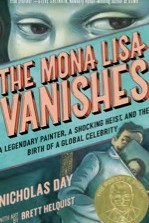
What This Book Is About
On August 21, 1911, a man walked into the Louvre, took the Mona Lisa off the wall, hid it under his coat, and walked out. The most famous painting in the world simply vanished. But here is the turn Nicholas Day builds the book around: before the theft, the Mona Lisa was not the most famous painting in the world. It was one of many paintings in the Louvre. The theft is what made it a celebrity, and this book is the story of how that happened.
The thief was Vincenzo Peruggia, an Italian who had worked at the Louvre. Nicholas Day tells the story of the theft alongside the story of Leonardo da Vinci's own life, so the book is part art history and part true crime, and it keeps returning to the question of what makes something famous in the first place. Illustrated by Brett Helquist. It won the Robert F. Sibert Informational Book Medal in 2024, the American Library Association's award for the year's best informational book for children.
Available at Popular bookstores, Kinokuniya, and the Singapore National Library.
Why UWC Chose This Book
International school curricula are increasingly non-fiction heavy, yet many students struggle with the genre. This book solves that problem by making non-fiction read like a thriller. The fast-paced narrative, rich illustrations, and "wait, really?" revelations on every page train students to engage with informational text in a way that dry textbooks never can. It is excellent preparation for the research and analytical reading UWC expects from Grade 5 onward.
The book also raises fascinating questions about fame, cultural value, and who decides what matters in art—themes that connect naturally to UWC's emphasis on critical thinking and international-mindedness. In Singapore, where students visit the National Gallery and ArtScience Museum regularly, this book gives them a framework for asking deeper questions about what they see.
Reading Level Guide
Too challenging at A1. The art history vocabulary and longer passages need at least A2 reading proficiency.
The sweet spot. The illustrations support A2 readers, while the narrative complexity builds B1 skills.
A breezy, fascinating read at B2. Perfect for building non-fiction reading habits and art vocabulary.
Other UWC Recommended Books for This Grade
Not sure if this book is right for your child? Take our free 30-minute English assessment to find their CEFR level, then choose books that match.