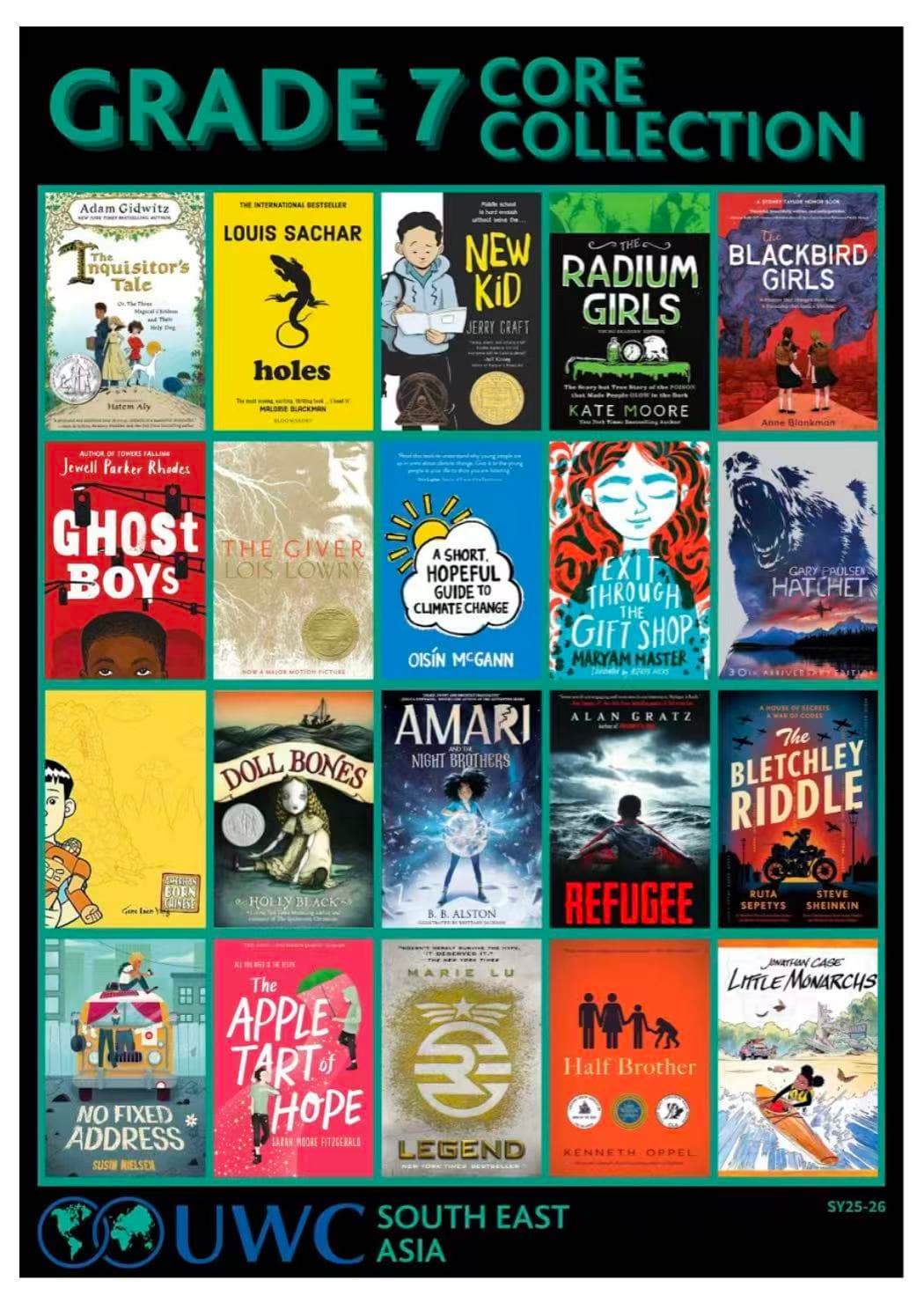
Every year, UWCSEA (United World College of South East Asia) publishes a Core Collection for each grade level—a curated reading list designed not just to improve English, but to build empathy, critical thinking, and international-mindedness. These are not textbooks. They are windows into lives your child has never lived, places they have never been, and moral questions they will wrestle with for years to come.
We have organized the 20 books on the Grade 7 list into themes to help parents see what their children will encounter—and why it matters.
Courage & Survival
What would your child do if they were suddenly, completely alone? At twelve, most kids have never faced real adversity—which is exactly why these books matter. They put young protagonists into four very different kinds of impossible: wrongful imprisonment in a desert labor camp, a solo plane crash in the Canadian wilderness, three refugee journeys across three continents, and the quiet desperation of living in a van while pretending everything is fine at school. What connects them is not the hardship itself but the discovery that courage is not something you are born with—it is something you build, one impossible day at a time. For students entering an international school environment, where they will meet classmates whose lives look nothing like their own, these stories are a first step toward understanding that survival takes many forms.
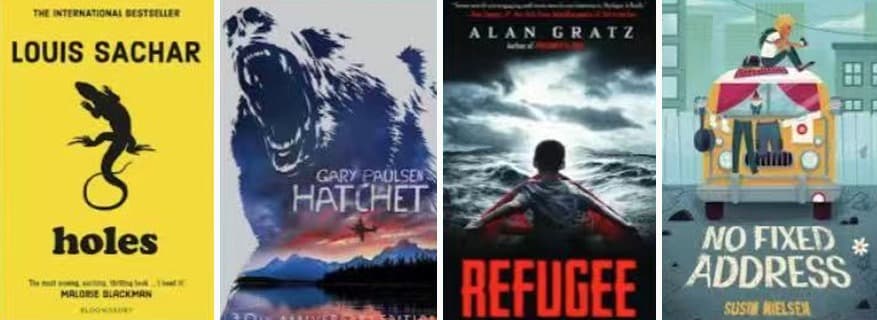
Stanley Yelnats, wrongly convicted of theft, is sent to a brutal desert camp where boys dig holes all day. Three timelines interweave—a Latvian curse, a Wild West outlaw, and Stanley's present-day fight. Clever, funny, and deeply layered. Almost every student who reads it remembers it for life.
Brian, 13, sole survivor of a plane crash in the Canadian wilderness. Armed with only a hatchet. A raw, gripping survival classic.
Refugee
Alan GratzThree children, three eras—fleeing Nazi Germany, Castro's Cuba, and the Syrian war. Their stories interweave toward a devastating and hopeful conclusion.
Felix lives in a van with his mom but keeps it secret. Heartbreaking and hilarious—homelessness seen through a resilient kid's eyes.
Confronting Injustice
How do you teach a twelve-year-old that the world is not always fair—without making them cynical? That is the quiet genius of these four books. They approach injustice from radically different angles: a Black boy killed by police, factory girls poisoned by their employer, two girls fleeing nuclear fallout into a home haunted by antisemitism, and a kid navigating racism at a prestigious school through comic panels. None of them lecture. Instead, they let readers inhabit the experience—feel the confusion, the anger, the slow realization that systems can fail people. For Grade 7 students at an international school, where classrooms hold dozens of nationalities, these stories build the empathy muscle that no textbook can. They learn not just that injustice exists, but what it feels like from the inside.
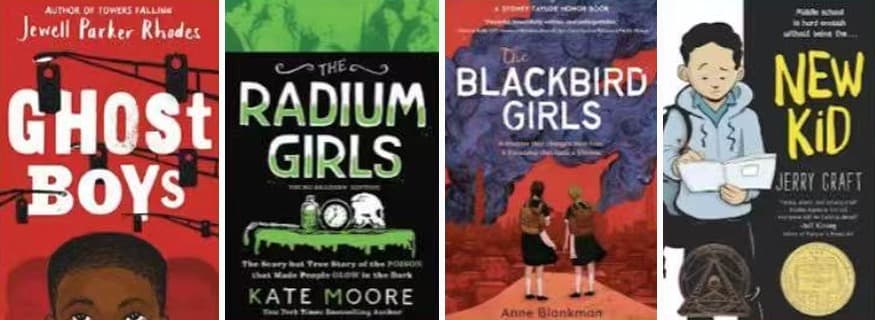
Ghost Boys
Jewell Parker RhodesTwelve-year-old Jerome is shot by a police officer who mistakes his toy gun for a real one. As a ghost, he meets other ghost boys whose stories echo across American history. Slim but devastating.
The true story of young women who painted watch dials with luminous radium paint—and the devastating consequences when they discovered it was killing them. Their fight for justice changed labor laws forever.
The Blackbird Girls
Anne BlankmanAfter Chernobyl explodes, two Ukrainian girls flee to Leningrad and share an apartment with a Jewish grandmother who survived WWII. Prejudice, resilience, and unexpected friendship across two generations.
Jordan dreams of art school but ends up at a prestigious private school as one of the few kids of color. Microaggressions, cultural clashes, and identity—told through stunning graphic-novel panels.
Are these books the right level for your child?
Our free 30-minute assessment identifies their exact CEFR level (A1 to C1).
Imagining Other Worlds
Why does UWCSEA put a dystopian novel and a fantasy about a secret magic agency on the same reading list as books about the Holocaust and climate change? Because the best speculative fiction does not ask readers to escape reality—it asks them to see reality more clearly by changing the rules. What would you sacrifice for a world without pain? What happens when the government decides who is a criminal and who is a hero? Can prejudice follow you even into a world of magic? These four books span a controlled utopia, a fractured future state, a supernatural underworld, and a post-apocalyptic butterfly migration—but every one of them is really about the choices we make right now. For twelve-year-olds developing their capacity for abstract thinking, this is where critical analysis begins: not with an essay prompt, but with a story that refuses to give easy answers.
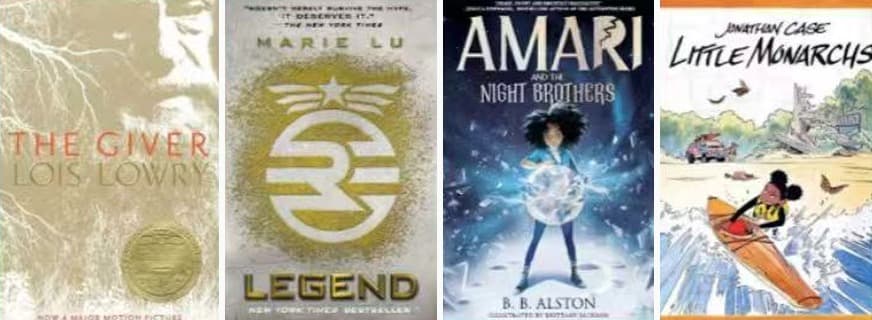
In a community where pain, conflict, and choice have been eliminated, twelve-year-old Jonas becomes the Receiver of Memory—and realizes his utopia is built on a terrible lie. Perhaps the most important book on this list. It asks the question every international school wants its students to grapple with: what are you willing to sacrifice for the illusion of safety?
Legend
Marie LuIn a dark future Los Angeles, the Republic's most wanted criminal and its most brilliant prodigy collide. Dual perspectives, non-stop action, and nothing is what it seems.
Amari and the Night Brothers
B.B. AlstonAmari discovers her missing brother was part of a secret supernatural agency. As the only unofficial magician, she faces prejudice at every turn. Called "Men in Black meets Harry Potter."
Little Monarchs
Jonathan CaseIn a world where sunlight kills, a girl and her guardian follow the monarch butterfly migration. A gorgeous graphic novel about science, survival, and found family.
History Comes Alive
Ask a twelve-year-old what they know about the Middle Ages and you will probably get "knights and castles." Ask about World War II and they might mention Hitler. These two books blow past the surface. One drops three children with miraculous powers into 1242 France, where religious persecution is burning books and people alike—told through competing narrators at an inn, like a junior Canterbury Tales. The other is set at Bletchley Park in the summer of 1940, where a nineteen-year-old is working on the Enigma cipher and his fourteen-year-old sister refuses to accept that their mother is dead. What makes both remarkable is that they do not just teach history—they make readers feel what it was like to be young, powerless, and caught inside a turning point. That sense of personal connection to the past is exactly what international education tries to cultivate: the understanding that history is not something that happened to other people long ago, but a chain of human decisions that shaped the world your child lives in today.
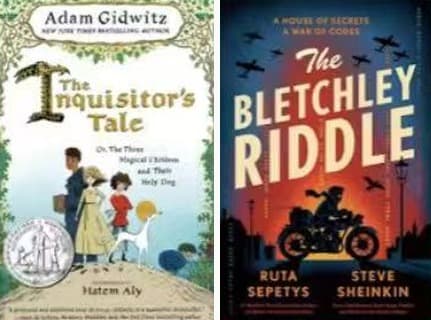
The Inquisitor's Tale
Adam Gidwitz, illustrated by Hatem AlyNewbery Honor 20171242, France. Three children with miraculous gifts and a resurrected greyhound are pursued by the king's men while trying to stop the burning of the Talmud. Told in turns by travellers at an inn, like a medieval Canterbury Tales.
The Bletchley Riddle
Ruta Sepetys & Steve SheinkinSummer 1940. Jakob is already a codebreaker at Bletchley Park when his fourteen-year-old sister Lizzie arrives, refusing to believe their mother is dead. Two award-winning authors narrate one sibling each.
Growing Up & Finding Yourself
Twelve is the age when the ground shifts. Friendships that once felt permanent start to change. Parents turn out to be complicated. The things you used to play with start to feel childish, but the adult world is not ready to let you in either. These four books live in that in-between space, and they do it without condescension. One follows three friends on a quest with a possibly haunted doll—really a story about the terrifying moment when imagination stops being enough. Another watches a boy wrestle with loving a chimpanzee that science says is just a test subject. A third is narrated by a twelve-year-old who is dying of cancer and who tells the last year of her life with fury and with jokes. And the fourth is a small, fierce novel about refusing to believe someone you love is gone forever. Together they show Grade 7 readers that the confusion they are feeling is not a bug—it is the beginning of understanding who they are.
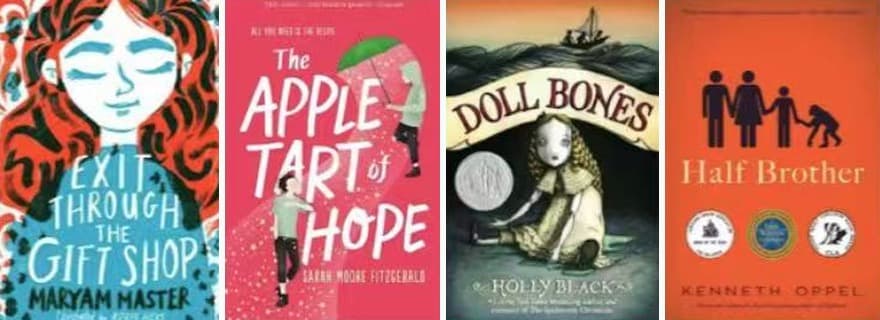
Three friends find a bone-china doll that may contain real human bones. Their quest to return it becomes a journey about growing up and the line between imagination and reality.
The Apple Tart of Hope
Sarah Moore FitzgeraldWhen Oscar disappears and everyone assumes the worst, only Meg refuses to give up. A lyrical novel about depression, friendship, and the small things that keep us going.
Exit Through the Gift Shop
Maryam Master, illustrated by Astred HicksTwelve-year-old Ana is dying of cancer and narrates the last year of her life with fury and jokes. The title is a figure for leaving life, not a shop. A debut about living hard against the clock.
Half Brother
Kenneth OppelBen's parents bring home a baby chimpanzee as part of a language experiment. As Zan learns sign language, Ben confronts what happens when science treats a living being as just a subject.
Our Planet, and Our Place in It
If there is one thing international schools agree on, it is that the next generation needs to understand the planet they are inheriting. But how do you make a twelve-year-old care about climate change without either terrifying them or boring them? The first of these two books is an illustrated guide that refuses to soften the science and equally refuses to leave the reader in despair: it sets the problem next to the millions of people already working on it, and tells young readers how to join them. The second book is not about the environment at all. It is a graphic novel about growing up Chinese American, and it does the other thing a reading list has to do, which is to let students read about themselves. One book asks what kind of world your child is inheriting; the other asks who they are going to be in it.
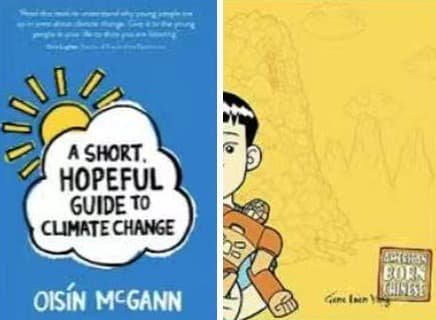
A Short, Hopeful Guide to Climate Change
Oisín McGannExplains climate change without sugarcoating or doom-mongering. Covers causes, effects, and what young people can do. Accessible and surprisingly optimistic.
American Born Chinese
Gene Luen YangPrintz Award 2007Eisner Award 2007National Book Award Finalist 2006Three stories braid together: the Monkey King of Journey to the West, Jin Wang, a Chinese-American boy in a mostly white suburb who wishes he were someone else, and "Danny", whose grotesquely stereotyped cousin Chin-Kee turns out to be the Monkey King in disguise. A graphic novel Gene Luen Yang both wrote and drew.
Want to filter these books by level or genre?
Use our interactive book finder tool with cover images and CEFR filters.
A Note for Parents
If you are considering UWCSEA—or any top international school in Singapore—this reading list tells you something important about what these schools value. They want students who can think across cultures, sit with ambiguity, and feel deeply about the world beyond their own experience. Reading is how that starts.
Not sure if your child is ready to read these books independently? Our free English assessment takes just 30 minutes and tells you their exact CEFR level—so you know whether to start with Holes or The Giver, and where they might need support.
Is your child ready for Grade 7 English at UWC?
Our free 30-minute assessment identifies their CEFR level (A1 to C1) and shows whether they meet the English requirement for top international schools in Singapore.
Take the Free Assessment