Why Nexus Fits Chinese Families
For Chinese families choosing an international school in Singapore, the question is rarely “which school is most prestigious.” The real question is: my child’s English isn’t strong enough — can they get in, and once they’re in, can they keep up?
That anxiety is real and entirely reasonable.
As we explained in our breakdown of Singapore international school English requirements, top-tier schools like UWCSEA, Tanglin, and SAS rarely admit students below B1, especially at upper grades. For a child who has just arrived from China with textbook-level English, those doors are effectively closed.
Nexus International School Singapore is one of the few exceptions.
Nexus accepts true beginner-English students and surrounds them with a complete, four-tier English support system. From “cannot follow a class in English” to “sitting the IBDP exam independently and scoring well,” every step has a defined curriculum, specialist EAL teachers, and measurable exit criteria.
Just as importantly, Nexus is not a “stepping-stone” school. Many parents treat EAL schools as a launchpad, planning to transfer once English improves. But Nexus’s IB results show it is a destination in its own right — a 35.1 IB average in 2025, almost five points above the global mean, with a top score of a perfect 45. Twenty-three per cent of the cohort earned the Bilingual Diploma.
A school that can take a beginner-English Chinese child and graduate them with an IB Bilingual Diploma is telling you something important about itself.
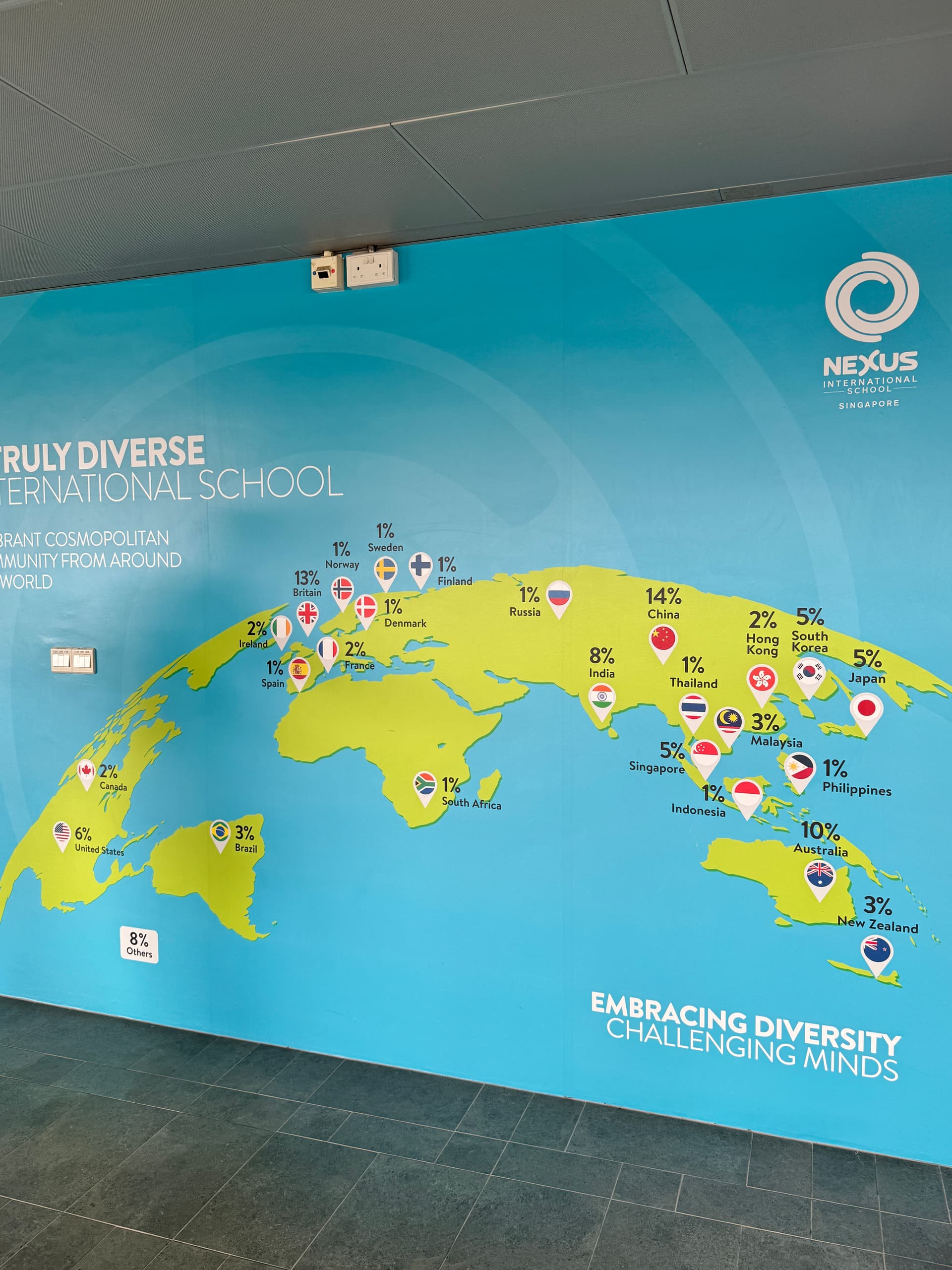
Nexus today has over 1,500 students drawn from more than 60 nationalities, spanning ages 3 to 18. The largest group is British (12.6%), followed by Indian, American (5.6%), Korean (5.4%), Singaporean (4.9%), and Filipino (4.9%). It is a genuinely mixed international community, not a campus dominated by one passport.
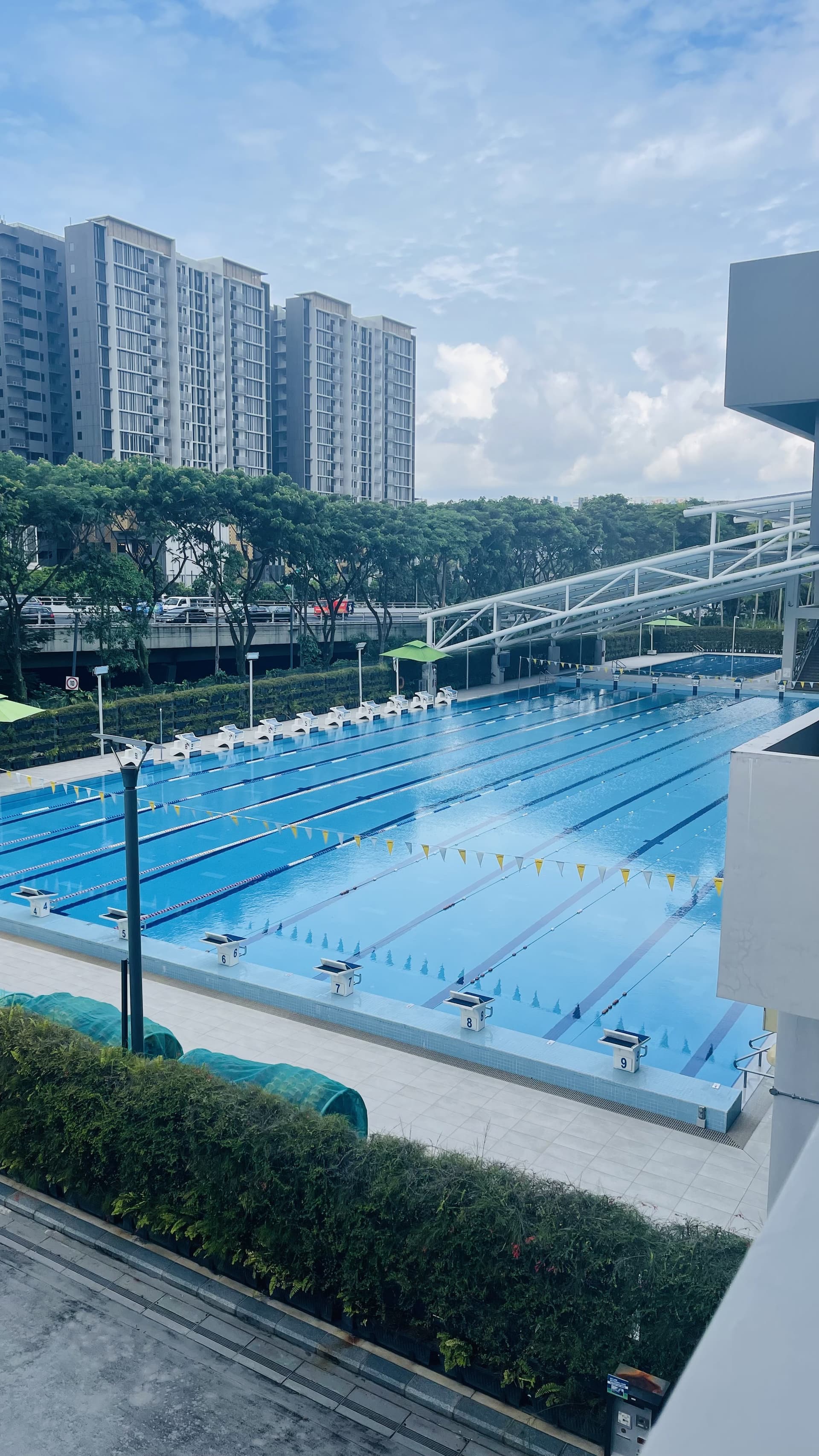
The school sits in Singapore’s Aljunied area, on a 12-storey purpose-built campus with a competition-standard pool, a theatre, and full science labs. Nexus is part of Malaysia’s Taylor’s Education Group and is an Apple Distinguished School.
The 4-Tier EAL Support System
This is the part of Nexus most worth understanding in depth.
For many international schools, “EAL” means a few extra English classes a week. Nexus is different. Its English support is a layered system with clearly defined assessment, placement, instruction, and exit criteria. The school calls it an “asset-based approach” — EAL learners are not treated as students with a problem, but as students who already speak one language (Chinese) and are now adding a second.
A four-tier pyramid
Nexus structures English support in four tiers, from the top (least support) to the base (most support):
Mainstream — students who need no additional English support, sitting all regular classes alongside native-speaker peers.
Tier 2: Additional English Support (AES) — students who need light extra help. 2.5 hours of targeted English instruction each week, scheduled in the LOTE (second-language) slot. The focus is academic English — helping students follow content across all subjects. Available from Nursery to Year 6. Cost: S$3,000 per semester (2 semesters per year).
Tier 3: Intensive English Support (IES) — students with weaker English foundations. They take English in the Language Arts slot plus an additional 2.5 hours weekly, for a combined 6-10 hours of EAL each week. Available Year 2-6. Cost: S$5,000 per semester.
Tier 4: Foundation English Support (FES/FP) — students at zero English or new to English-medium schooling. This is the most intensive tier.
Full participation in all regular classes.
2.5 hrs/week. Nursery-Y6. S$3,000 per semester.
6-10 hrs/week combined. Y2-Y6. S$5,000 per semester.
The full immersion programme for true beginners. Primary FES: S$6,000 per semester. Secondary FP: standalone tuition.
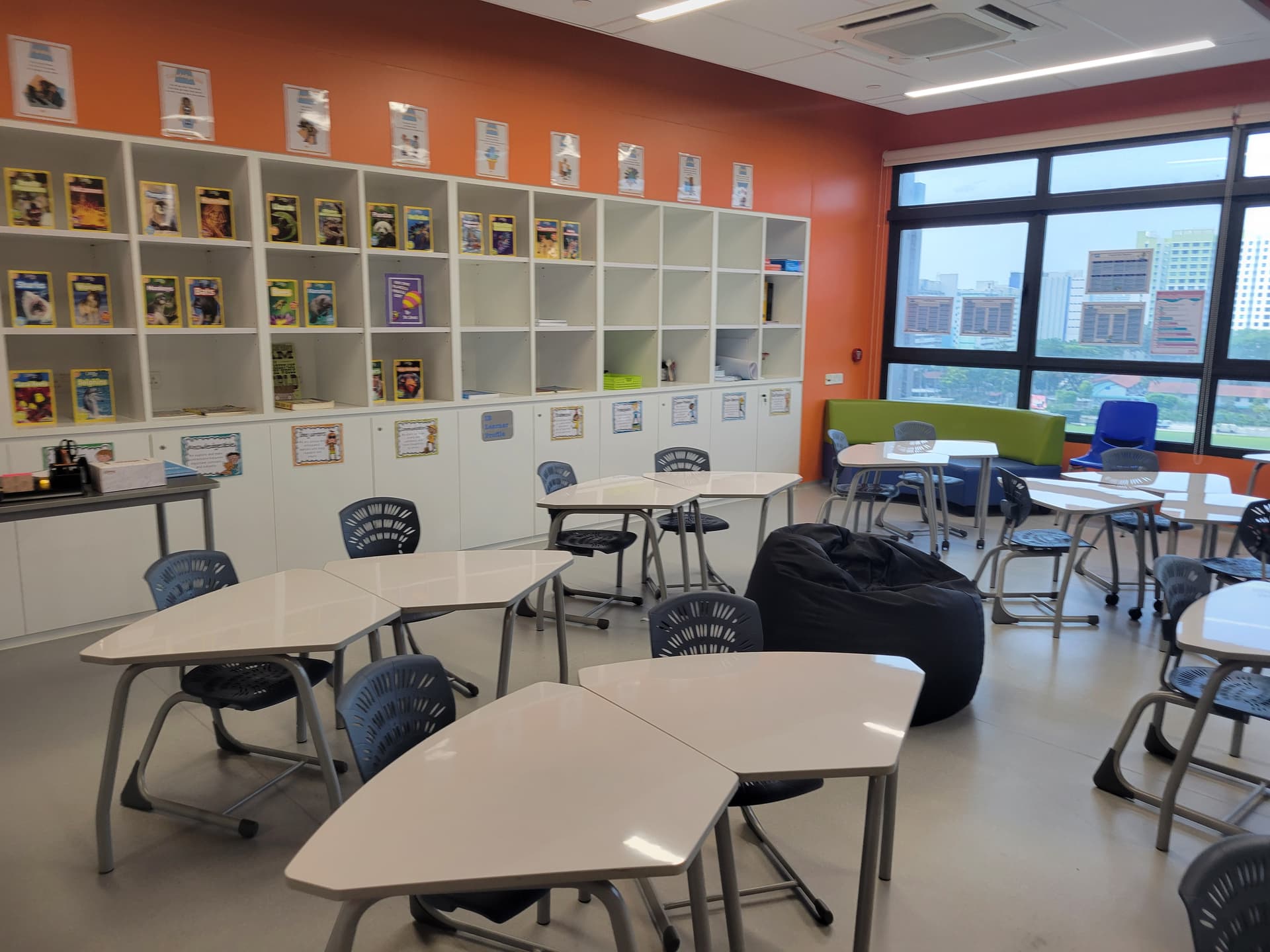
FES primary (Year 2-6): a one-year immersion programme
- Term 1: 70% foundational English + 30% academic content. Establish classroom routines.
- Term 2: 60% English + 40% academic content. Maths added; group work begins.
- Term 3: 40% English + 60% academic content. Gradual integration into mainstream classes.
- Term 4: 30% English + 70% academic content. Student-led projects, prepared for assembly presentation.
The homeroom teacher is also a qualified EAL specialist. Children continue to attend all specialist classes (music, PE, art) alongside mainstream peers.
Cost: S$6,000 per semester (2 semesters per year).
FP secondary (Year 7-8): the Foundation Programme
The secondary Foundation Programme is even more intensive. Students sit in a dedicated FP homeroom for English (reading, writing, academic vocabulary), and take EAL versions of Science and Individual & Societies — same units as mainstream, with language scaffolding. Maths, Art, and Tutor are with mainstream peers.
Foundation Programme tuition is standalone: Year 7 is S$55,200/year and Year 8 is S$57,800/year. This replaces mainstream tuition (it is not added on top) and includes all EAL support.
Assessment frameworks
Nexus uses two internationally recognised English-proficiency frameworks:
WIDA (primary focus) — six levels (Entering → Emerging → Developing → Expanding → Bridging → Reaching) across listening, speaking, reading, writing. Typical schools see WIDA gains of 1.0-1.5 per academic year. Nexus FES students post: listening 2.27, speaking 3.67, writing 2.83, reading 3.25 — speaking gains are more than double the typical rate.
CEFR (secondary focus) — A1 to C2. Foundation (Y7-8) maps to A1, Intensive (Y7-8) to A2, Intensive (Y9-11) to B1, Additional (Y7-8) to B1, Additional (Y9) to B2.
From Year 10-11 onwards, IELTS is also introduced as preparation for the IBDP.
Exit criteria
Primary: students may exit at the end of any term. IES averages 12 months to exit; AES averages 10 months.
Secondary: exit requires CEFR C1 (Strong) or WIDA 5.5+, plus positive sign-off from both EAL and mainstream teachers, and successful transition lessons. Nexus weighs “what the student can actually do” over a single test score.
What this means for Chinese families
The appeal of the Nexus EAL system to Chinese families comes down to one phrase: it doesn’t turn you away.
If your child is at zero English right now, UWCSEA will not admit them. Tanglin will not admit them. SAS most likely will not. Nexus will.
And Nexus is not “just get in the door.” It hands you a clear roadmap: here is where your child is now, here is where they will be in a year, here is what they will be able to do in two. The four-term FES design is that roadmap on paper.
If your child is at zero English today, Nexus is one of the very few Singapore international schools that says yes — and it can show you exactly how the next 12 months will unfold.
Want to know which EAL tier your child would be placed in?
Our free assessment maps your child to the CEFR scale Nexus uses.
Academic Pathway: MYP → IGCSE → IBDP
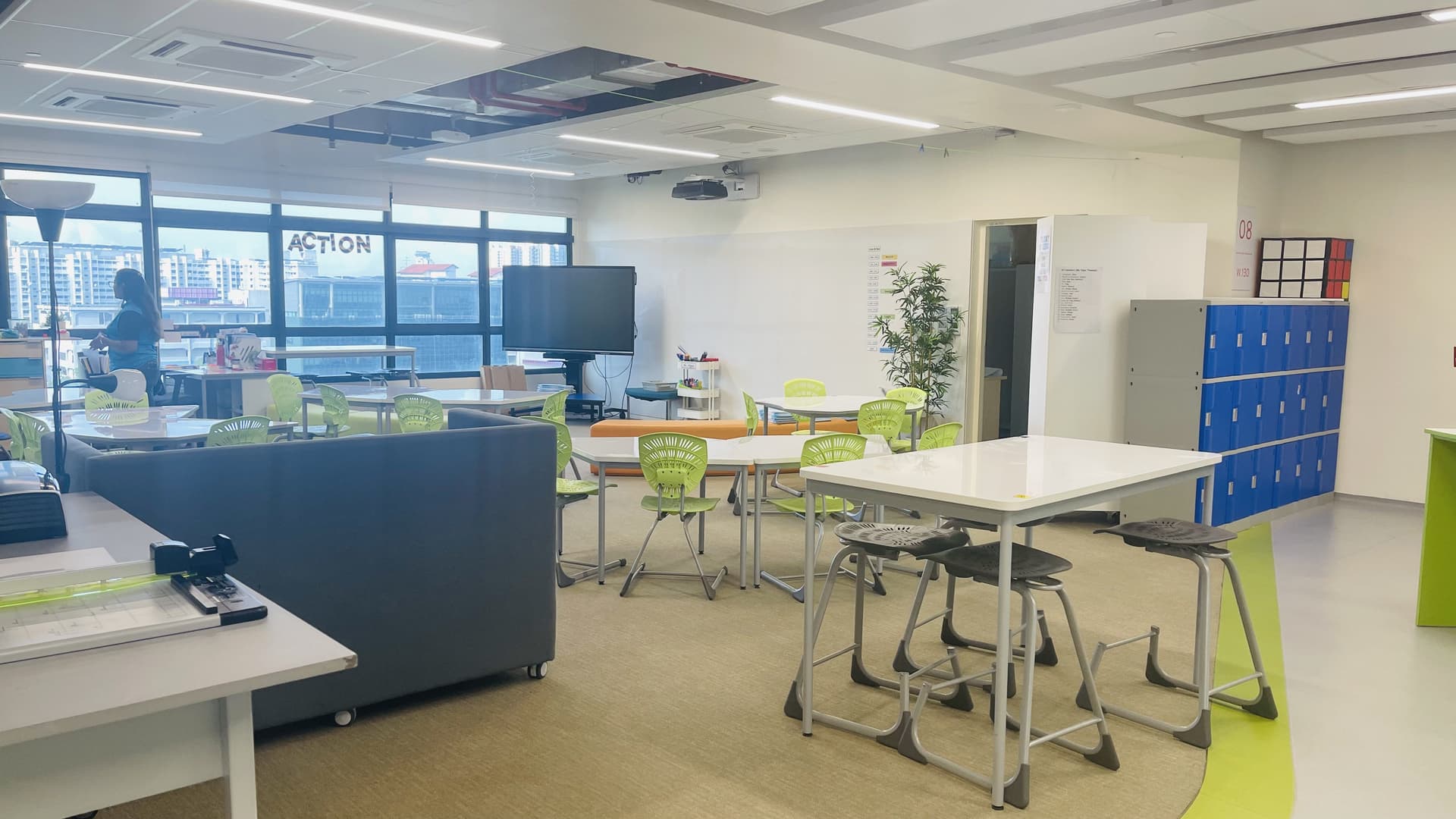
The Nexus academic path is a single continuous pipeline from Year 7 to Year 13. Understanding it is essential to making a school decision. For how Singapore international school year groups map to Chinese age cohorts, see our grade system guide.
Y7 → Y13 pipeline
Year 7-9: IB Middle Years Programme (MYP)
MYP covers eight subject groups: Language Acquisition, Language & Literature, Individual & Societies, Sciences, Mathematics, Arts, Physical & Health Education, and Design.
Assessment is criterion-based: each subject has four criteria scored 0-8, producing a final indicative grade from 1-7. This is very different from the percentage-grading Chinese parents are used to. MYP is not built around a single “mark” — it measures performance across specific competencies.
For Chinese students, the biggest adjustment in MYP is not the academic difficulty but the inquiry-based learning style. Students who are used to teacher-led, listen-and-take-notes lessons are suddenly asked to pose questions, do their own research, and write reflections. That shift takes time — and it is also where MYP delivers most of its value.
Homework: Y7-8, 30-50 min/subject/week; Y9, 40-60 min/subject/week, with one week to complete.
Year 10-11: IGCSE
Five core subjects: Maths, English, Science, Language Acquisition, Global Perspectives.
Choose-from-eleven options: Arts, Business, Design, Drama, Economy, Geography, History, Music, PE, Science (extra), Higher Maths.
2025 Nexus IGCSE results: 54% A*-A / 9-7, 52% Cambridge A and A*, 55% Edexcel 9-7, 99.9% pass rate. The most common grade in English and Maths was A* and 9/8.
For EAL students at IGCSE: IES (Tier 3) students follow a tailored timetable. Instead of choosing IGCSE options, they use those slots for continued EAL support — English for Academic Purposes (EfAP) and IELTS preparation. They take the five core IGCSEs plus English as a Second Language. The two-year goal is to bring their English up to IBDP-ready level by the end of Y11.
Year 12-13: IB Diploma Programme (IBDP)
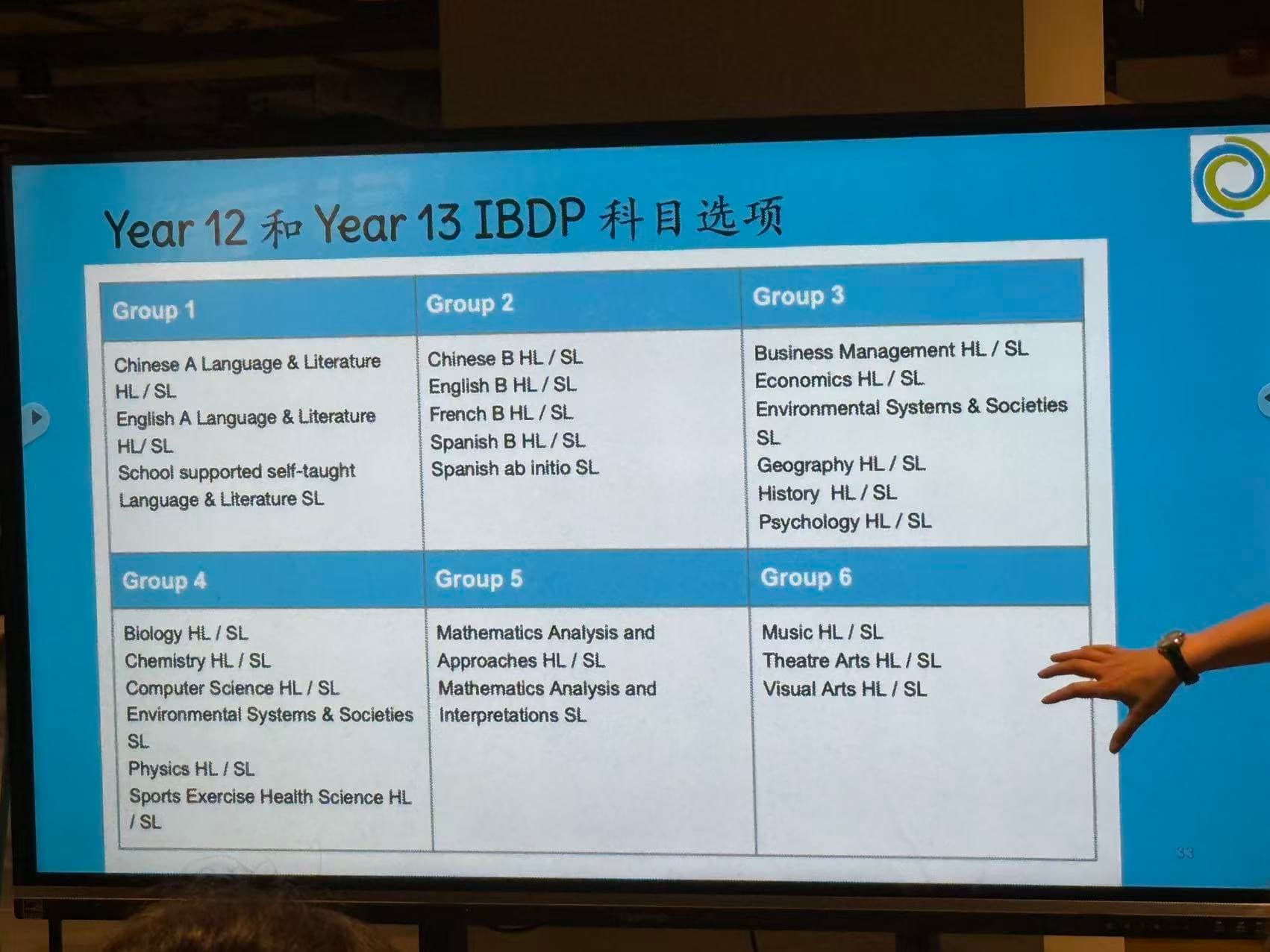
Group 1 (Language & Literature): Chinese A Language & Literature HL/SL, English A Language & Literature HL/SL, School Supported Self-taught Language & Literature SL.
Group 2 (Language Acquisition): Chinese B HL/SL, English B HL/SL, French B HL/SL, Spanish B HL/SL, Spanish ab initio SL.
Group 3 (Individuals & Societies): Business Management HL/SL, Economics HL/SL, ESS SL, Geography HL/SL, History HL/SL, Psychology HL/SL.
Group 4 (Sciences): Biology HL/SL, Chemistry HL/SL, Computer Science HL/SL, ESS SL, Physics HL/SL, Sports Exercise Health Science HL/SL.
Group 5 (Mathematics): Maths Analysis & Approaches HL/SL, Maths Applications & Interpretations SL.
Group 6 (Arts): Music HL/SL, Theatre Arts HL/SL, Visual Arts HL/SL.
The key advantage for Chinese students: Group 1 includes Chinese A Language & Literature, so a Chinese student can take this most-weighted IB subject in their mother tongue. Pairing it with English B in Group 2 — rather than English A — keeps the English requirement aligned with where most EAL students actually are. This combination dramatically increases the chance of earning a Bilingual Diploma, which 23% of the Nexus 2025 cohort achieved.
2025 Results & University Outcomes
35.1
IB average (vs 30.58 global)
45/45
Top score
43%
Above 35 points
23%
Bilingual Diploma
IBDP 2025
- Average: 35.1 (global average 30.58 — almost 5 points higher)
- Top score: 45/45 — a perfect score
- 43% of students scored above 35
- 23% earned the Bilingual Diploma
These numbers need their context. The global IB average of 30.58 includes every top school in the world. Nexus’s 35.1 places it in the upper-mid tier of Singapore international schools. And given that Nexus admits a large EAL cohort — many of whom were at zero English a few years earlier — the value-added is substantial.
IGCSE 2025
- 54% A*-A / 9-7 grades
- 99.9% pass rate
- Most common grade in English and Maths: A* and 9/8
University destinations
The 2025 cohort received offers from the University of Cambridge, Penn State, the University of Nottingham, and other overseas institutions, alongside leading Asian universities including NUS.
Full Fee Breakdown
One-time entry fees
- Application Fee: S$1,090
- Enrolment Fee: S$5,123
- Development Levy (annual): S$1,744
Annual tuition by year group
| Year group | Annual (S$) | Per semester (S$) |
|---|---|---|
| Nursery (half day) | 25,600 | 12,800 |
| Nursery (full day) | 32,400 | 16,200 |
| Kindergarten | 36,000 | 18,000 |
| Year 1 | 39,000 | 19,500 |
| Year 2-3 | 41,200 | 20,600 |
| Year 4-5 | 42,800 | 21,400 |
| Year 6-7 | 43,200 | 21,600 |
| Year 8-9 | 45,800 | 22,900 |
| Year 10-11 | 47,800 | 23,900 |
| Year 12-13 | 49,000 | 24,500 |
Foundation Programme tuition (standalone)
| Programme | Annual (S$) | Per semester (S$) |
|---|---|---|
| Year 7 Foundation | 55,200 | 27,600 |
| Year 8 Foundation | 57,800 | 28,900 |
Note: Foundation Programme tuition (Tier 4) replaces the year-group tuition — it is not added on top.
EAL add-on fees (on top of regular tuition)
| Tier | Per semester (S$) | Per year (S$) |
|---|---|---|
| Additional English Support (Tier 2) | 3,000 | 6,000 |
| Intensive English Support (Tier 3) | 5,000 | 10,000 |
| Foundation English Support (Tier 4, primary) | 6,000 | 12,000 |
Real-world fee scenarios
Scenario 1: Year 7 Chinese student, zero English, Foundation Programme
Foundation tuition S$55,200 + Development Levy S$1,744 ≈ S$56,944/year
Scenario 2: Year 5, some English, IES (Tier 3)
Tuition S$42,800 + IES S$10,000 + Development Levy S$1,744 ≈ S$54,544/year
Scenario 3: Year 10, mainstream
Tuition S$47,800 + Development Levy S$1,744 ≈ S$49,544/year
Sibling discounts
Second child 3%, third child 15%, fourth and beyond 25%. Discount applies to the second/third child's tuition and cannot be combined with other discounts or scholarships.
How fees compare
Among Singapore international schools, Nexus tuition sits in the lower-mid range. UWCSEA Year 7-8 is roughly S$48,000-S$51,000 (and does not accept EAL students); Tanglin is roughly S$42,000-S$48,000; SAS is roughly S$45,000-S$55,000. Nexus Year 7 mainstream at S$43,200 — combined with its EAL infrastructure and IB results — is excellent value.
Oak Education's Advice
Oak Education is an officially authorised admissions partner for Nexus and an English-education platform built around Chinese families. Based on our deep familiarity with Nexus and our long-running view of the Singapore international school market, here is what we tell parents:
Pick Nexus first if
- Your child has weak or zero English and needs systematic English support
- Your family wants the IB pathway towards overseas universities
- You want your child to take Group 1 in Chinese and aim for the Bilingual Diploma
- Your annual budget is S$40,000-S$55,000
- You don’t want a “stepping stone” school — you want one school that takes the child all the way through
Look elsewhere if
- Your child is already near-native in English and doesn’t need EAL — apply directly to UWCSEA or Tanglin
- You prefer the American (AP) curriculum over British/IB
- Brand prestige and long history are top priorities — Nexus opened in 2007, vs Tanglin (1956) and UWCSEA (1971)
Before you apply
- Take a standardised English assessment to know your child’s real level. Our free CEFR assessment places your child on the same scale Nexus uses.
- Build a daily English reading habit. The book doesn’t need to be hard — just at the right level. Our graded reading resources are organised by CEFR level.
- Get familiar with the year-group system. British Year notation does not map cleanly to Chinese grade numbers — see our grade system guide.
How Oak Education helps
- Assess your child’s English level and predict the EAL tier they would land in
- Help with application materials and the full enrolment workflow
- Answer any questions about Nexus curriculum, fees, or EAL programme — in Chinese
- Provide pre-enrolment English coaching if needed
Frequently Asked Questions
Does Nexus accept students with zero English?
Yes. The Foundation Programme (Tier 4) is purpose-built for true beginners and students new to English-medium instruction. Both primary (Year 2-6) and lower secondary (Year 7-8) entry points are available.
How long does the EAL programme typically take?
Based on Nexus's own data, the average exit time for IES (Tier 3) is around 12 months, and AES (Tier 2) averages about 10 months. Actual timing depends on the child's starting point, age, and engagement.
How does Foundation Programme tuition differ from mainstream?
Foundation Programme uses a standalone fee — S$55,200/year for Year 7 and S$57,800/year for Year 8. This replaces the mainstream tuition (it is not added on top) and includes all EAL support.
How do Nexus IB results compare in Singapore?
The 2025 average of 35.1 sits well above the global IB average of 30.58 and places Nexus in the upper-mid tier of Singapore international schools. Given the high share of EAL learners, the value-added is significant.
Can Chinese students study Chinese in the IBDP?
Yes. Group 1 includes Chinese A Language & Literature at HL and SL, so Chinese students can take this core subject in their mother tongue. Pairing it with English B in Group 2 opens the path to a Bilingual Diploma.
What is Oak Education's relationship with Nexus?
Oak Education is an officially authorised admissions partner for Nexus. We help Chinese families with assessments, applications, and the full enrolment process.
Considering Nexus for your child?
As an officially authorised Nexus admissions partner, Oak Education guides Chinese families through assessment, application, and enrolment — in Chinese.
Start Free Assessment