
Choosing a college that truly fits you requires far more than a single number on a ranking table. What’s the school’s real atmosphere? Is the food any good? Do professors genuinely care about teaching? Is the campus safe? You won’t find answers to these questions in official brochures.
Niche (pronounced “nitch”) is one of the most popular school research platforms in the United States. Its core idea is to combine official statistics with real student reviews to generate a multi-dimensional “report card” for every college. The platform is completely free to use.
What Niche Actually Does
Niche is not a simple college ranking. It builds standardized data profiles for over 6,000 U.S. colleges, integrating three types of information on a single page: multi-dimensional letter grades, official admissions and cost data from the U.S. Department of Education, and real reviews and polls from current students and alumni.
Take Harvey Mudd College as an example: a private liberal arts college in Claremont, California (Los Angeles area), founded in 1955, focused on STEM and part of the Claremont Colleges consortium, with popular majors including Engineering, Computational & Applied Mathematics, and Computer Science. On Niche, you can see at a glance its Overall Grade (A+), acceptance rate (13%), average annual net cost ($37,622), and undergraduate enrollment of 919, then dive into the detailed data behind each dimension.
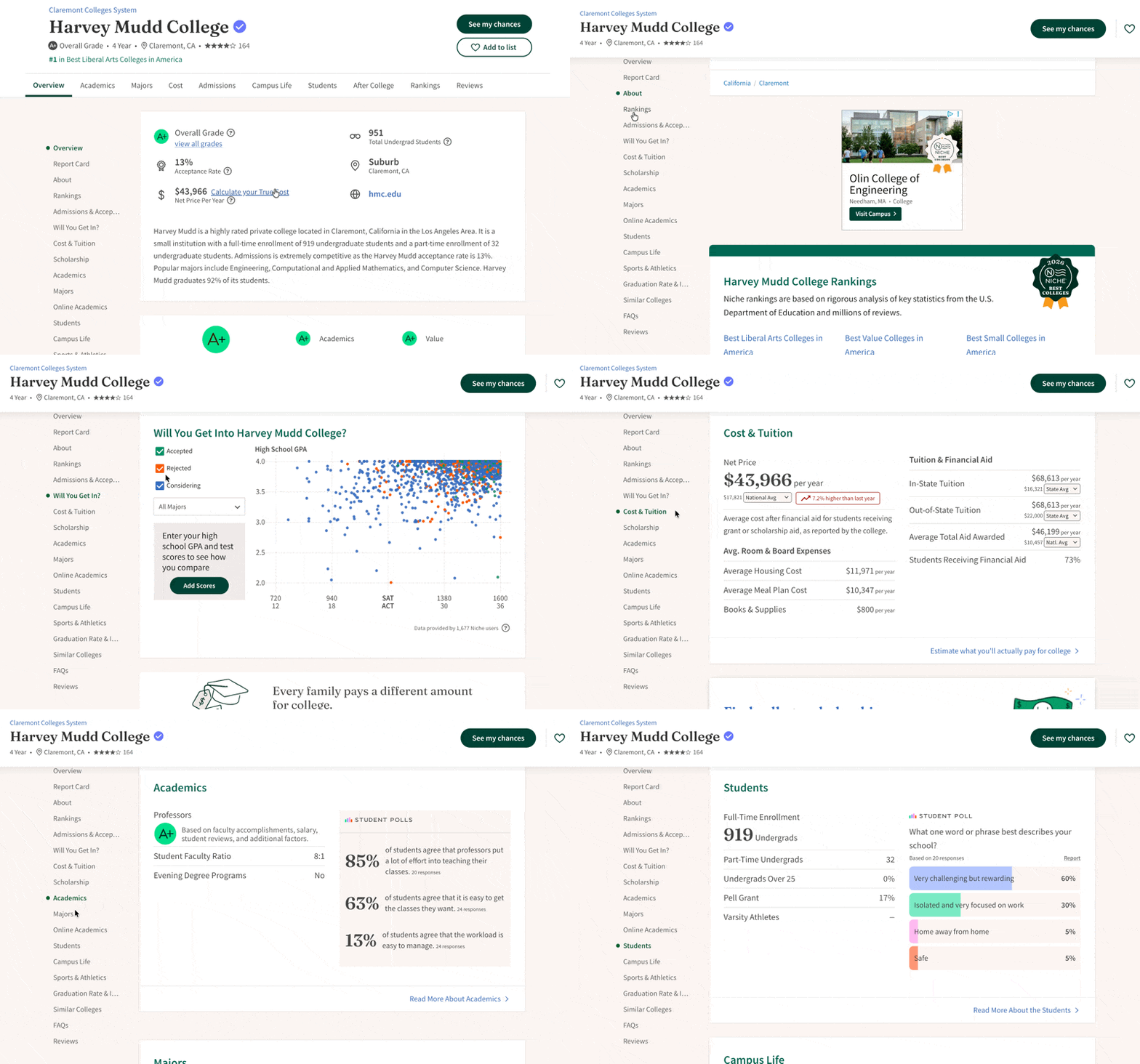
How the Platform Is Organized
Layer 1: Search & Filter
Niche’s college search page supports multi-dimensional filtering. You can cross-filter by state, city, major, school type (public/private), selectivity, tuition range, campus size, religious affiliation, and more. Each search result card displays the grade, acceptance rate, and tuition upfront, so you can make initial comparisons without clicking through.
Layer 2: The School Report Card
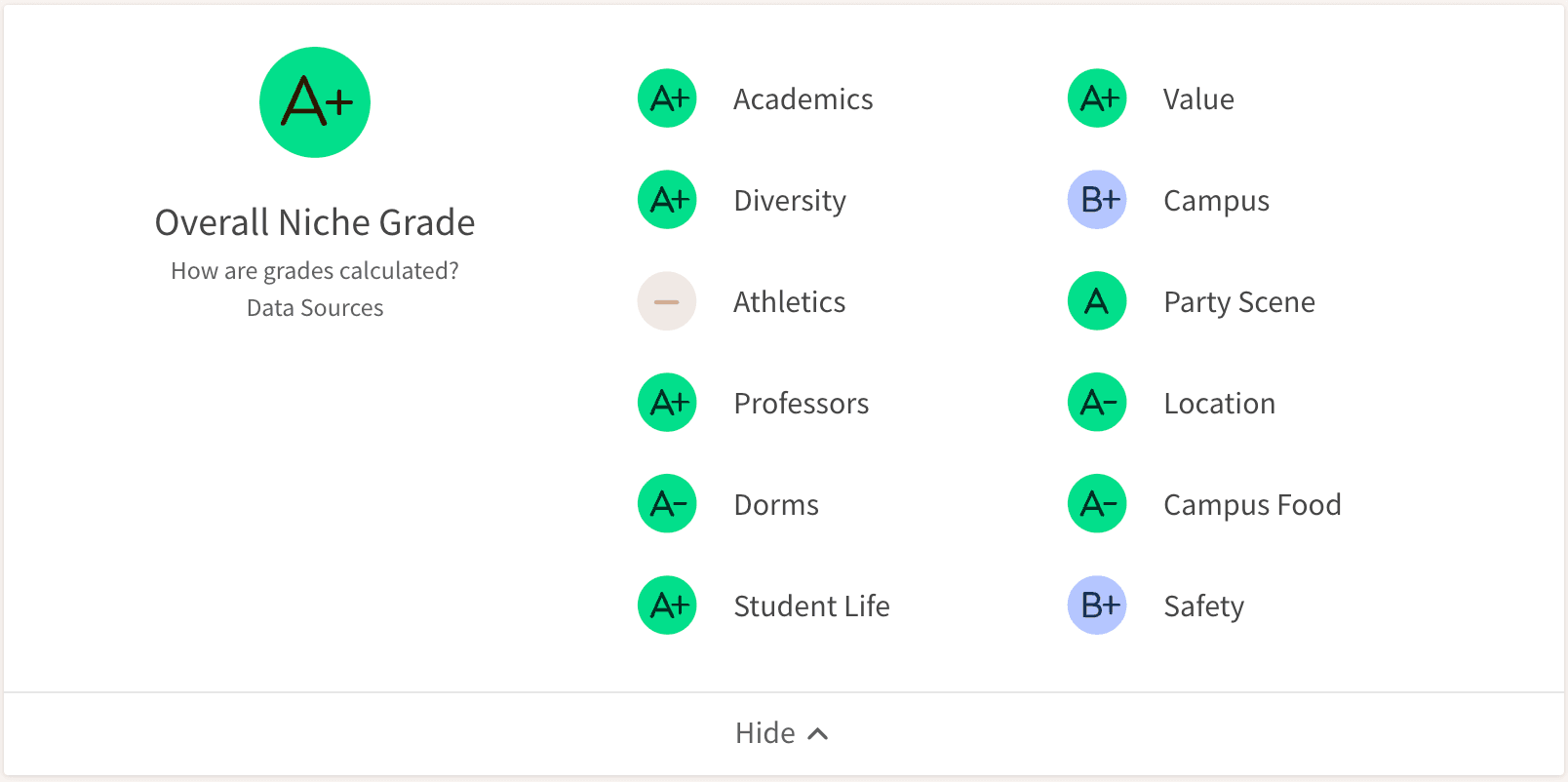
Clicking on any college reveals Niche’s signature Report Card: letter grades across 12 dimensions. For Harvey Mudd College, the card shows: Academics A+, Value A+, Diversity B+, Campus A−, Athletics C+, Party Scene B, Professors A+, Location A, Dorms B+, Campus Food A−, Student Life A−, Safety A−.
The data behind these grades comes from two sources: objective indicators from the U.S. Department of Education’s IPEDS database (acceptance rate, graduation rate, student-faculty ratio, median earnings, etc.) and student surveys and reviews collected by Niche itself.
Layer 3: Deep-Dive Data Pages
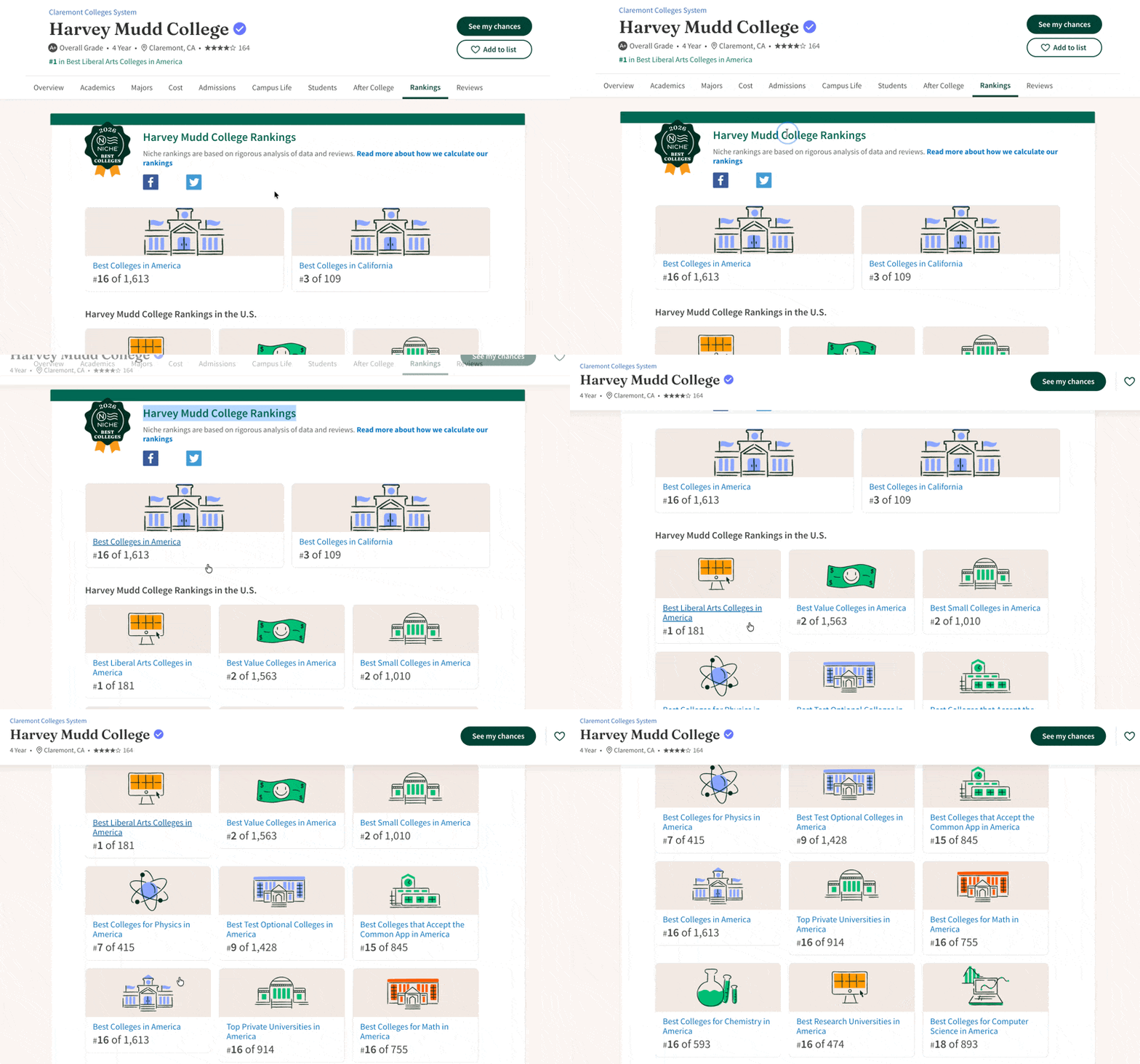
Each school’s profile also has dedicated sub-pages: Academics, Majors, Cost, Admissions, Campus Life, Students, After College, Rankings, and Reviews. Each sub-page presents official data and student polls side by side.
Two Features Worth Knowing
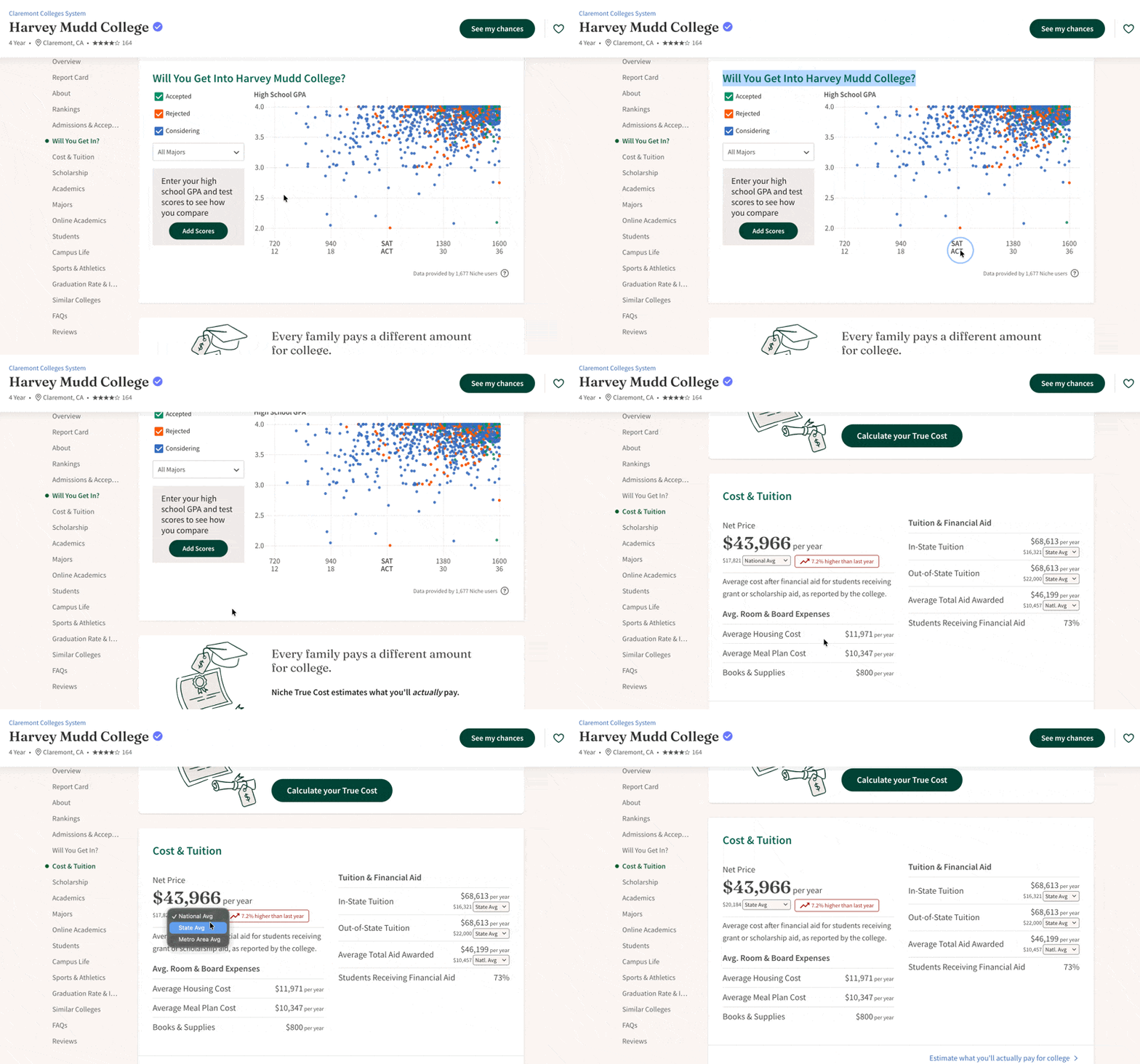
Admissions & Cost Transparency
Most platforms only give you a single “tuition” figure. Niche breaks costs down to every layer: sticker-price tuition (Harvey Mudd $73,100/year), average financial aid ($59,349/year), actual net cost ($37,622/year), plus separate line items for room ($12,570), board ($10,864), and books ($800). The admissions section also shows SAT range (1500–1570), ACT range (34–36), application deadlines, whether the school accepts the Common App, and whether it’s test-optional. These are the most practical data points for application decisions.
The “net price” shown on Niche comes from the U.S. Department of Education’s IPEDS database. It represents the average out-of-pocket cost for students receiving aid, calculated as total Cost of Attendance (tuition, room, board, books, etc.) minus all scholarships and grants. For private universities like Harvey Mudd, tuition is the same regardless of residency, so the net price figure is broadly representative. For public universities, however, in-state and out-of-state tuition can differ dramatically (e.g., $16,347 vs $50,547 in the example above), and Niche’s headline net price is heavily weighted toward in-state students. International or out-of-state students should expect to pay significantly more. International families are advised to estimate costs based on out-of-state tuition rather than relying on Niche’s net price figure for public schools.
Real Student Reviews & Polls
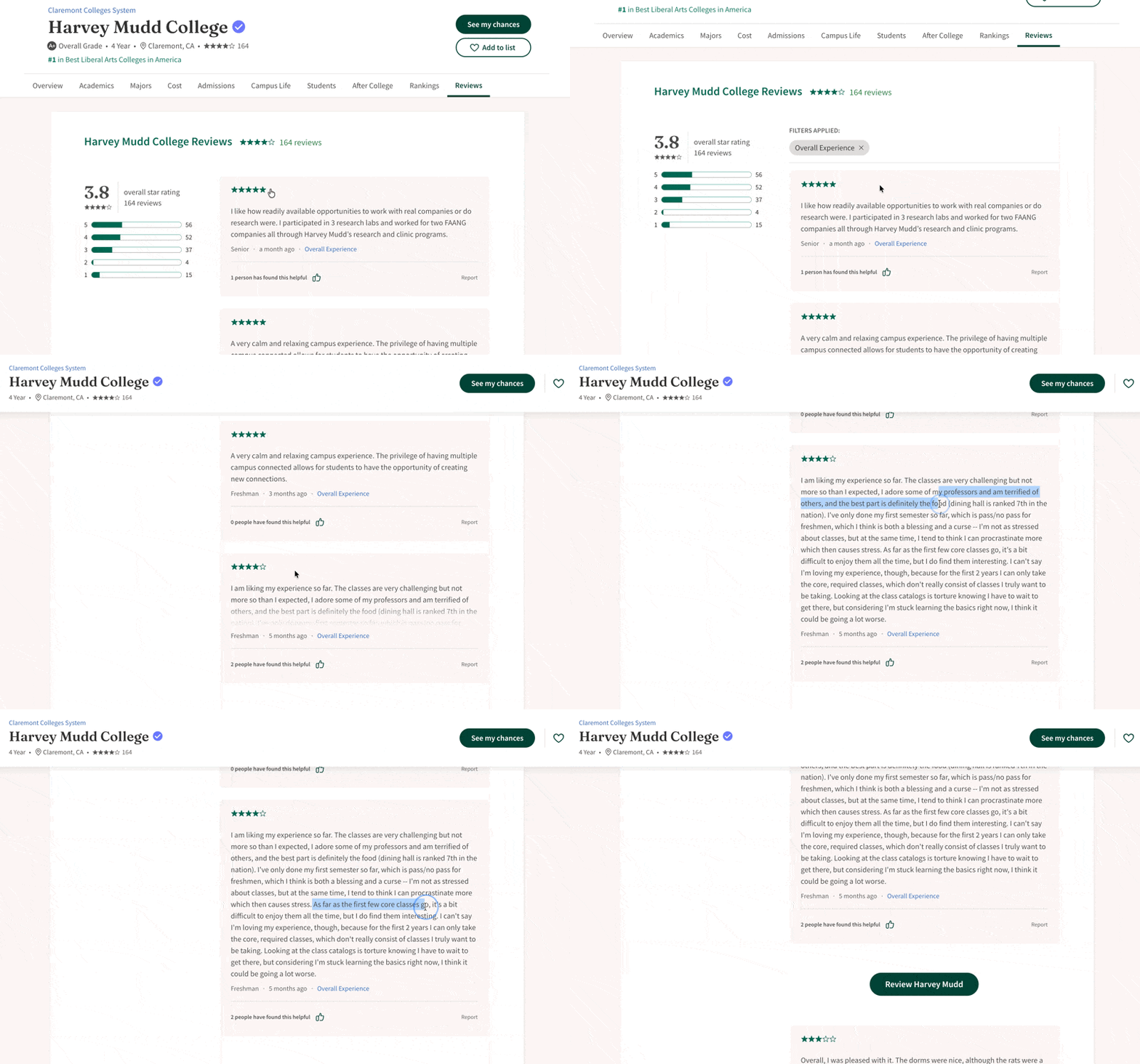
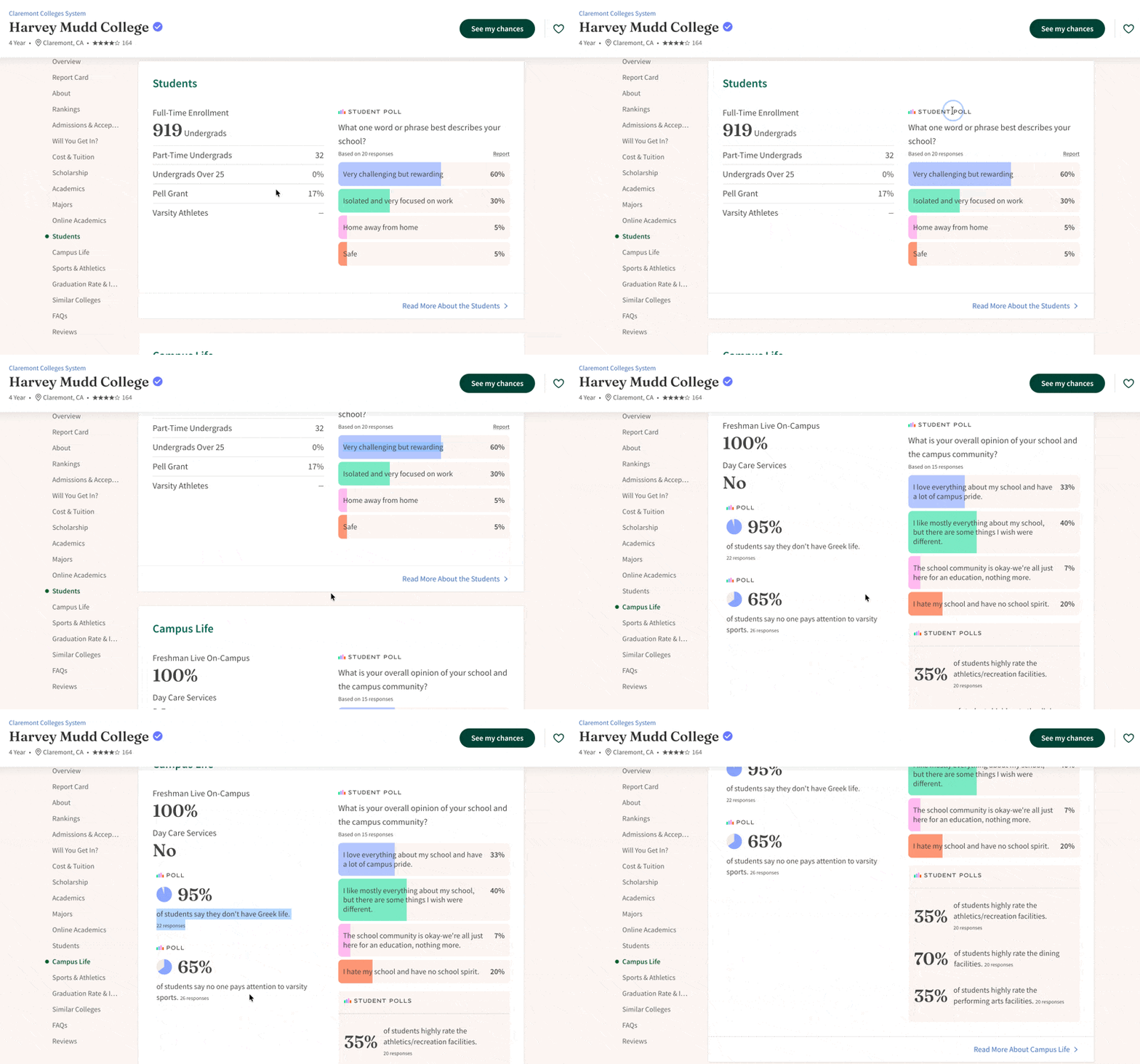
Niche’s most unique asset is its database of 900K+ student reviews. Each school has not only written reviews and 1–5 star ratings (Harvey Mudd: 3.79/5, 164 reviews), but also poll data on specific questions. For example, Harvey Mudd’s polls show: 81% of students say they feel extremely safe on campus, 50% say the student body is very diverse in race, ethnicity and cultural background, and 63% say you can have a great social life without drugs or alcohol. This granularity is invisible in official marketing.
Direct Admissions: Acceptance Without Applying
Niche partners with selected universities to offer a Direct Admissions feature. Qualified students can receive admission offers from partner schools without submitting a formal application. This reduces uncertainty in the application process and spares students from repeatedly filling out similar materials. Harvey Mudd College is one of the schools participating in Direct Admissions.
It is important to note that Direct Admissions is currently available only to U.S. citizens and permanent residents. International students (such as those on F-1 visas) cannot receive offers through this feature and must apply through the regular admissions process.
How to Use It: Step by Step
- 1
Start with filters. On the Niche college search page, set the 2–3 conditions you care about most (e.g., state, major, tuition range).
- 2
Scan the report cards. Open schools that interest you and check the 12-dimension grades. Focus on the dimensions that match your priorities.
- 3
Dig into costs. Compare the net cost (not sticker price) of 2–3 schools, noting the average financial aid amount and the percentage of students who receive it.
- 4
Read student reviews. Written reviews provide atmosphere details that official data can't replace. Pay special attention to whether the same issue appears repeatedly in negative reviews.
- 5
Check the poll data. Polls carry more statistical weight than individual reviews: they represent group consensus, not personal experience.
- 6
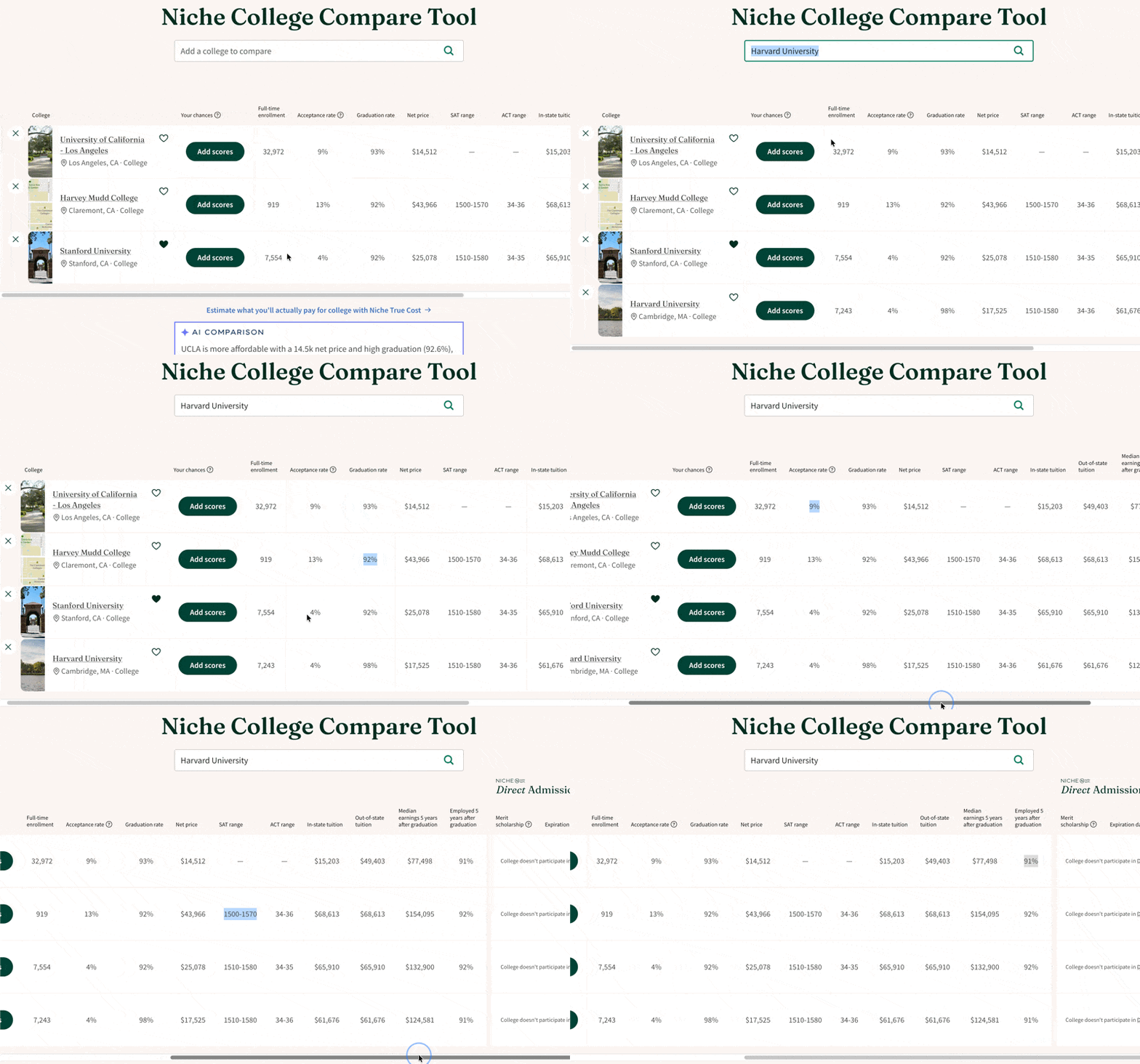
Use the Compare feature. Niche supports up to 4 schools side by side, making it quick to spot differences.
What Niche Doesn’t Cover
Niche focuses entirely on U.S. schools. It does not cover universities in Singapore, the UK, Canada, Australia, or anywhere else internationally. Its grading system and cost data are also framed within the U.S. education system. The platform doesn’t address IB, IGCSE, or A-Level entry requirements, the very thing students at Asian international schools care about most.
While the student review database is massive, it has self-selection bias: students with strong positive or negative feelings are more likely to leave reviews, so moderate opinions may be underrepresented. Niche’s grading algorithm is also proprietary, making it impossible to fully reverse-engineer the weight assigned to each factor.
🌏 For students considering universities outside the U.S.
If you’re looking at universities anywhere else in the world, Niche can’t help: it only covers U.S. schools. Our Major Explorer covers major university programmes worldwide, helping students understand what each major involves, where it leads, and what graduates do.
💡 Pro Tip
Cross-verify Niche with other sources. Use Niche for the student perspective and granular data, College Board’s BigFuture for major-to-career mapping, our Global Major Explorer to go deep on any major, and then visit official university websites for the latest admissions policies.
Who Should Use This Tool
Niche is most valuable for grade 9–12 students who are building their initial college shortlists. It’s especially useful for two groups: students who want to understand both the “hard data” (acceptance rates, salaries, costs) and the “soft experience” (atmosphere, food, social life) of a school; and parents who want to evaluate schools across multiple dimensions beyond rankings alone.
Niche’s review system also gives parents and students a shared factual basis for discussions. When there’s a disagreement about a school’s atmosphere, citing poll data and student reviews is far more constructive than guessing.
If you’ve already narrowed your school list using Niche and want to explore specific majors in depth, our Global Major Explorer offers detailed analysis of every major. Our Major Explorer covers major university programmes worldwide, helping students understand what each major involves, where it leads, and what graduates do.

Frequently Asked Questions
What is Niche?
Niche is one of the largest school research platforms in the U.S., providing multi-dimensional letter grades for 6,000+ colleges. It combines official education data with real student reviews to help students and parents make more informed college decisions.
How are Niche grades calculated?
Niche grades combine two types of data: official statistics from the U.S. Department of Education's IPEDS database (such as acceptance rate, graduation rate, student-faculty ratio) and student surveys and reviews collected by Niche. The specific weighting is Niche's proprietary algorithm.
Is Niche useful for international students?
If you're considering U.S. colleges, Niche is very useful: its student reviews and cost breakdowns are hard to find elsewhere. But if your targets are universities in Singapore, the UK, or Canada, Niche can't help. Use country-specific tools alongside it.
How is Niche different from U.S. News rankings?
U.S. News primarily ranks schools by academic reputation and research output. Niche grades cover 12 dimensions (including food, social life, dorms, and other lived experiences) and heavily incorporate real student reviews. The two perspectives complement each other well.
Niche is a free service provided by Niche.com Inc. Oak Education is not affiliated with Niche. Data in this article comes from Niche's public pages and the U.S. Department of Education's IPEDS database. Links verified May 2026.